Balancing Sustainability and Survival: Nigeria’s Plastic Ban Debate Highlights SME and Job Concerns
 ONYINYECHI NWAIGBA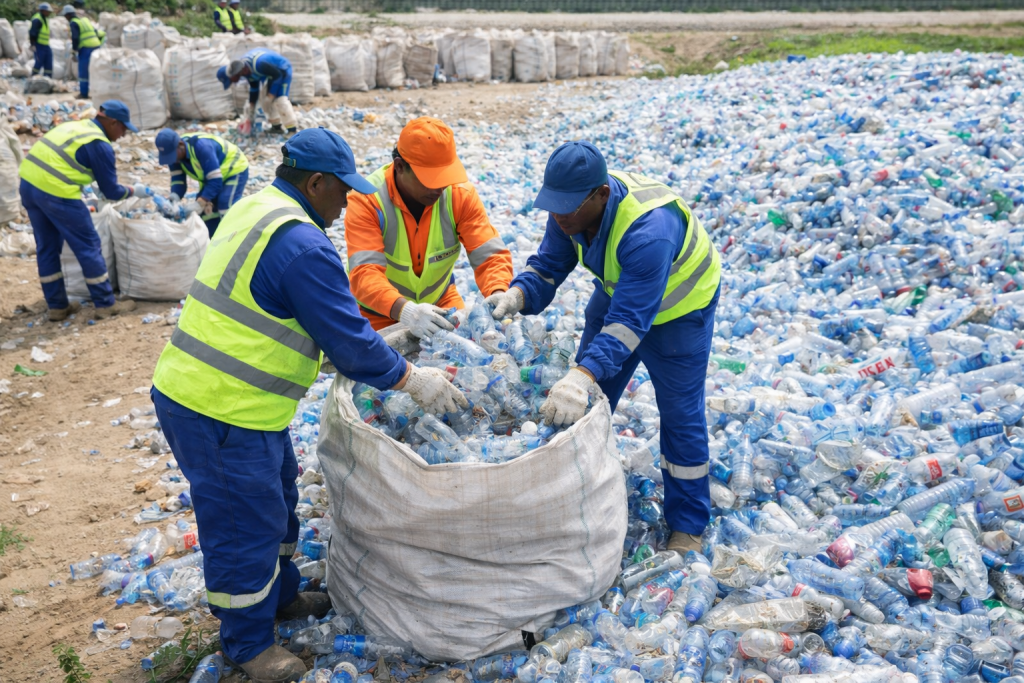
As Nigeria intensifies efforts to address plastic pollution and environmental degradation, a new policy proposal targeting single-use plastics is generating widespread debate across the manufacturing sector, small business community, and environmental advocacy groups.
The draft regulation, which seeks to restrict the production and use of single-use plastics below 80 microns and introduce levies on certain plastic products, is being positioned by policymakers as part of a broader strategy to reduce environmental waste and promote sustainability.
However, manufacturers and industry stakeholders are warning that without careful planning and phased implementation, the policy could place significant pressure on small and medium-sized enterprises (SMEs), threaten jobs, and slow industrial growth at a time when the economy is already under strain.
The conversation highlights a familiar challenge in developing economies: how to balance urgent environmental goals with economic realities and livelihood protection.
SMEs at the Centre of Nigeria’s Plastic Value Chain
Small and medium-sized enterprises form the backbone of Nigeria’s manufacturing and informal economy. In the plastics ecosystem, SMEs are involved in packaging production, food processing, retail distribution, logistics, and recycling-related activities.
For many of these businesses, plastic materials are not a luxury but a critical input that enables affordability, scalability, and competitiveness.
From sachet water producers to food vendors, agricultural packaging firms to small-scale distributors, plastic remains one of the most widely used materials due to its low cost, durability, and accessibility.
Industry stakeholders argue that any abrupt restriction on widely used plastic materials could disrupt this ecosystem, especially for small businesses that operate with thin profit margins and limited access to alternative packaging solutions.
Manufacturers caution that without viable and affordable substitutes, SMEs could face increased production costs, reduced output, or even business closures in some cases.
Concerns Over Timing and Economic Pressure
One of the central concerns raised by manufacturers is not necessarily the intention behind the policy, but its timing and implementation approach.
Nigeria is currently navigating a challenging macroeconomic environment characterized by inflationary pressures, foreign exchange constraints, and rising operational costs for businesses.
Against this backdrop, stakeholders argue that introducing additional regulatory costs on production materials could further strain already vulnerable enterprises.
For many SMEs, survival depends on cost efficiency. Even small increases in packaging or input costs can significantly affect pricing, competitiveness, and consumer demand.
Manufacturers therefore warn that without careful transition planning, the policy could unintentionally push some businesses out of the formal economy or reduce their ability to scale operations.
Industrial Competitiveness and Investment Concerns
Beyond SMEs, larger manufacturers are also expressing concerns about industrial competitiveness and investment stability.
Producing plastics that meet new regulatory standards such as thickness thresholds or alternative material requirements may require retooling of machinery, changes in production lines, and additional capital investment.
Industry stakeholders argue that such adjustments cannot happen overnight without risking financial losses, especially for firms that have already invested heavily in existing production infrastructure.
There are also concerns that increased production costs may be passed down to consumers, potentially exacerbating inflation and reducing purchasing power in an already fragile economy.
In sectors where margins are tight and competition is intense, even small cost changes can significantly affect market dynamics.
Employment and Livelihood Implications
Perhaps the most sensitive aspect of the debate is the potential impact on jobs.
Nigeria’s plastics and packaging industry supports thousands of direct and indirect jobs across the value chain. These include factory workers, machine operators, logistics providers, wholesalers, retailers, and informal market traders.
SMEs, in particular, are major employers of low- and middle-income workers, many of whom depend on daily or weekly earnings from plastic-related trade.
Stakeholders warn that sudden disruptions to the sector could lead to job losses, reduced incomes, and broader social consequences, especially in urban communities where informal trade plays a major economic role.
There is also concern that informal recycling systems, which already provide livelihoods for thousands of waste pickers and small recyclers, could be negatively affected if policy transitions are not carefully managed.
Environmental Imperatives Behind the Policy
Despite industry concerns, the push for plastic regulation is driven by legitimate environmental challenges.
Nigeria faces significant waste management issues, with plastic pollution contributing to blocked drainage systems, urban flooding, marine pollution, and public health risks.
Single-use plastics, in particular, have been identified as a major contributor to environmental degradation due to their low recycling rates and widespread disposal challenges.
Policymakers argue that regulatory intervention is necessary to shift consumption patterns, encourage alternative materials, and strengthen environmental responsibility across industries.
From a sustainability standpoint, reducing plastic waste aligns with global environmental goals and national commitments to improve waste management systems.
“According to the UNEP Plastic Pollution Report, single‑use plastics remain one of the biggest contributors to global environmental degradation, underscoring the urgency of Nigeria’s proposed reforms.
The Recycling and Infrastructure Gap
However, manufacturers and stakeholders emphasize that plastic pollution is not solely a production issue but also a systems problem.
Nigeria’s waste management and recycling infrastructure remain underdeveloped in many regions. Limited collection systems, insufficient recycling facilities, and low public awareness contribute significantly to environmental leakage.
Industry players argue that without strengthening these systems, bans or restrictions alone may not achieve the desired environmental outcomes.
In some cases, poorly implemented bans in other countries have led to unintended consequences such as the rise of informal markets for banned products or increased importation of substitutes that may not necessarily be more sustainable.
This has led stakeholders to advocate for a more holistic approach that includes infrastructure investment, public education, and producer responsibility mechanisms.
Calls for a Phased and Inclusive Transition
Manufacturers are not rejecting environmental reform entirely. Instead, they are calling for a more gradual, inclusive, and evidence-based approach to policy implementation.
Key recommendations from industry stakeholders include:
- Conducting a comprehensive regulatory impact assessment
- Engaging SMEs and informal sector players in consultations
- Strengthening recycling infrastructure before enforcement
- Introducing phased timelines for compliance
- Supporting research into affordable alternative materials
- Expanding producer responsibility frameworks
The argument is that sustainability policies must be designed in a way that protects both the environment and economic livelihoods, rather than prioritizing one at the expense of the other.
Global Lessons on Plastic Regulation
International experiences offer mixed lessons on plastic regulation.
Some countries that introduced outright bans without adequate infrastructure reportedly faced enforcement challenges, including black-market circulation of banned products and compliance difficulties among small businesses.
On the other hand, countries that adopted gradual transitions combined with recycling investments and public-private partnerships have recorded more sustainable outcomes.
These examples suggest that policy design and implementation strategy are just as important as policy intent.
Finding the Balance Between Environment and Economy
At the heart of the current debate is a broader question facing many developing economies: how to pursue environmental sustainability without undermining economic stability and job creation.
For Nigeria, where SMEs are a critical driver of employment and industrial growth, this balance is particularly important.
Stakeholders agree that environmental protection is necessary and urgent. However, they also stress that sustainable development must consider social and economic dimensions to ensure long term success.
Policies that ignore these interconnections risk creating new economic challenges even as they attempt to solve environmental ones.
Conclusion: A Policy Moment That Requires Dialogue
The proposed plastic regulation represents a significant step in Nigeria’s environmental policy direction. However, its success will depend largely on how it is implemented and whether stakeholders are adequately involved in the process.
As discussions continue between government agencies, manufacturers, SMEs, and environmental advocates, the need for dialogue, compromise, and evidence-based policymaking becomes increasingly clear.
Ultimately, the goal is not to choose between environmental protection and economic growth, but to find a pathway that allows both to coexist.
A well-balanced transition could position Nigeria not only as a country committed to sustainability, but also as one that protects its industries, empowers its SMEs, and safeguards livelihoods in the process.
See: Nigeria’s Recycling Crisis Starts Before Waste is in the Bin
[give_form id="20698"]