

Beyond the ₦450 Billion: Can Agricultural Financing Transform Nigerian Farmers’ Livelihoods?
 ONYINYECHI NWAIGBA
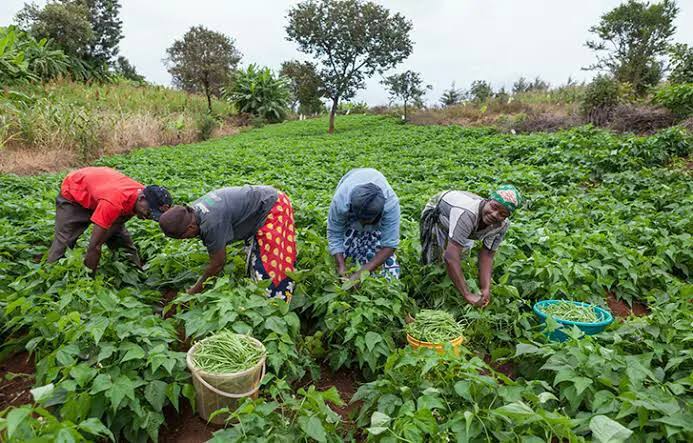
The Federal Government says its agricultural financing programmes have reached more than 500,000 smallholder farmers. But as Nigeria continues to battle food affordability, rising production costs and weaknesses across its agricultural value chain, the bigger test is whether the funding can deliver lasting improvements in farmers’ incomes and local food production.
Nigeria’s agricultural sector needs more than ambitious production targets. Farmers need access to affordable financing, reliable inputs, modern equipment, storage facilities and markets where they can sell their produce at prices that make farming worthwhile.
Without these essentials, even farmers who manage to secure loans may struggle to expand production or recover their investments.
Against this background, the Federal Government’s reported commitment of ₦450 billion to agricultural financing programmes has drawn attention to the role of public funding in strengthening local food production.
The announcement was made on November 22, 2026, by Dele Alake, spokesperson for the All Progressives Congress (APC) Presidential Campaign Council. According to the statement, the administration’s agricultural interventions have reached more than 500,000 smallholder farmers across 16 states, including over 70,000 women.
The announcement also highlighted fertilizer and seed distribution, commodity procurement, agricultural mechanization, dry-season farming and financing initiatives for women.
While the figures suggest a substantial investment in agriculture, they also raise important questions about access, implementation and measurable results.
How much of the committed funding has actually reached farmers? Are beneficiaries recording better harvests and higher incomes? And can the interventions create a stronger agricultural economy that supports farmers, processors, distributors and consumers?
These are the questions that should determine the success of Nigeria’s agricultural financing drive.
What Is Behind the ₦450 Billion Commitment?
The ₦450 billion commitment comprises two major programmes being implemented through the Bank of Agriculture (BOA).
The first is the ₦250 billion Renewed Hope Smallholder Support and Value Chain Fund, which provides financing and agricultural support through Farmer Aggregation Companies. These companies coordinate farmer registration, input distribution, extension services and market linkages.
According to the campaign council’s statement, the programme has reached more than 500,000 smallholder farmers across 16 states. It has also facilitated the distribution of approximately 2.5 million bags of fertilizer and 300,000 bags of certified seeds.
The programme has a broader target of reaching two million farmers and distributing more than 10 million bags of fertilizer.
The second intervention is the ₦200 billion Guaranteed Minimum Price Programme. Under this arrangement, the Bank of Agriculture has reportedly procured approximately 170,000 metric tonnes of maize, rice, sorghum and cassava.
The objective is to support commodity markets and protect farmers from distress sales, particularly when market prices fall below levels that can sustain profitable production.
Together, these programmes are intended to address two important challenges: helping farmers finance production and providing support for the marketing of agricultural commodities.
However, the existence of a financing programme does not automatically guarantee that farmers will receive adequate support or achieve better economic outcomes. The effectiveness of the interventions will depend on how funds are distributed, how beneficiaries are selected and whether the support reaches farmers when they need it.
Why Agricultural Financing Matters to Farmers
For many smallholder farmers, access to finance can determine whether they cultivate a small plot or expand production to meet growing market demand.
Agriculture requires significant investment before a farmer can earn anything from a harvest. Land preparation, seeds, fertilizer, labor, irrigation, pest control, harvesting and transportation all require money.
When farmers cannot afford these inputs at the right time, productivity suffers. Some reduce the size of their farms, use lower-quality inputs or abandon cultivation altogether.
Borrowing from informal lenders may provide temporary relief, but the cost of credit can make farming even less profitable.
Affordable agricultural financing can help address this problem by allowing farmers to purchase inputs, invest in equipment and improve their production capacity.
But loans alone are not enough.
A farmer who receives financing but cannot access quality seeds, irrigation, extension services or a reliable market may still struggle to repay the loan.
This is why the value chain approach behind the Smallholder Support Fund is important. It recognizes that agricultural productivity depends on several connected activities, from planting and harvesting to storage, processing and distribution.
For the programme to deliver lasting benefits, these components must work together rather than operate as separate interventions.
Women Farmers Must Be Part of the Growth
The reported inclusion of more than 70,000 women among the programme’s beneficiaries is another important aspect of the announcement.
Women contribute significantly to agricultural production, food processing and distribution in Nigeria. Yet many continue to face barriers to accessing land, affordable credit, agricultural inputs and formal markets.
These challenges can limit their ability to expand farming activities, employ workers or build businesses around agricultural production.
The campaign council also disclosed that the Bank of Agriculture is targeting at least 50,000 women nationwide through insured cooperative production financing at an interest rate of nine per cent.
The initiative is intended to support women through cooperative structures, making it possible to pool resources and access financing for agricultural activities.
However, the real impact should be measured by more than the number of women registered or included in a programme.
It should also consider how many receive funding, whether the financing reaches them on time, how much production increases and whether beneficiaries experience improvements in their incomes.
Women farmers should also have access to training, land, appropriate technology, storage and market opportunities. Without these complementary resources, access to financing alone may not be enough to overcome the barriers they face.
Supporting Farmers Beyond the Farm Gate
One of the more significant aspects of the announced interventions is the attention given to agricultural processing, storage and commodity markets.
Under its onion financing programme, the Bank of Agriculture is working with the National Onion Producers, Processors and Marketers Association of Nigeria (NOPPMAN), which represents more than 11,800 farmers.
The arrangement is designed to provide improved seeds and fertilizer to farmers while supporting processors with commodity purchase financing and plans for storage and solar-powered cooling facilities.
Under the reported financing arrangement, participating cooperatives contribute 30 per cent of their input costs, while the Bank of Agriculture finances the remaining 70 per cent.
This is relevant because post-harvest losses remain a major challenge for agricultural businesses.
Farmers can invest months in cultivating crops only to lose part of their harvest because of inadequate storage, poor transportation or limited access to buyers.
When produce cannot be stored properly, farmers may be forced to sell quickly, sometimes at prices that do not reflect the cost of production.
Investment in storage, cooling facilities and processing can help reduce these losses, improve market access and create additional business opportunities within agricultural communities.
It can also support the development of local food-processing businesses, which are important for creating jobs and reducing dependence on imported food products.
Agricultural financing should therefore extend beyond the farmer who grows the crop. Processors, aggregators, transporters, storage operators and distributors also need an environment in which they can access capital and operate sustainably.
Mechanisation, Irrigation and the Need for Better Infrastructure
The Federal Government’s reported agricultural interventions also include mechanization and dry-season farming initiatives.
According to the campaign council, 1,571 tractors have been deployed across 23 states under the Renewed Hope National Agricultural Mechanisation Programme. The tractors are expected to support the mechanization of approximately 1.2 million hectares of farmland through qualified mechanization service providers.
The Bank of Agriculture is also working with the All-Farmers Association of Nigeria on a dry-season farming pipeline targeting 400,000 farmers for the 2026 farming cycle.
The plan covers 120,000 hectares of wheat cultivation and another 300,000 hectares for crops including rice, maize, sorghum, millet, cassava and soybeans.
Another intervention highlighted in the announcement is a ₦385 billion productive-use-of-electricity programme, which is designed to provide 44,000 electric cargo tricycles and 100,000 solar-powered irrigation pumps, with a target of supporting 500,000 farming families.
These programmes address important weaknesses in Nigerian agriculture.
Many farmers still depend heavily on manual labor and seasonal rainfall. Limited access to tractors can delay land preparation and reduce the amount of land farmers can cultivate. Inadequate irrigation also makes production vulnerable to changing weather conditions.
Solar-powered irrigation systems could help farmers extend production beyond the rainy season, while mechanization can improve efficiency and reduce some labor constraints.
However, deploying equipment is only one part of the solution. Farmers must also be able to access the equipment affordably, receive technical support and maintain it over time.
Without proper maintenance arrangements, spare parts and trained operators, investments in agricultural machinery can lose their value.
The Bank of Agriculture’s Role in the Next Phase
Alongside the ₦450 billion agricultural financing commitment, President Bola Tinubu has approved a planned ₦1.5 trillion recapitalisation of the Bank of Agriculture.
The proposed recapitalisation is intended to strengthen the bank’s capacity to provide financing to farmers, cooperatives, processors, aggregators and other businesses operating across the agricultural value chain.
This is a significant development because agricultural financing requires institutions with the capacity to understand the risks and realities of farming.
Unlike many conventional businesses, farmers operate within seasonal production cycles and are exposed to weather conditions, pests, market fluctuations and other uncertainties.
Financial institutions must therefore develop financing arrangements that reflect the realities of agricultural production rather than applying conditions that make it difficult for farmers to repay.
The planned recapitalisation could provide the Bank of Agriculture with greater capacity to support the sector. However, approval of the funding should not be confused with the completion of the recapitalisation or the actual disbursement of the full amount.
Its success will depend on implementation, institutional capacity, transparent lending practices and the bank’s ability to reach farmers who are often excluded from conventional financing.
The Accountability Question: How Will Success Be Measured?
The scale of the announced agricultural interventions makes accountability particularly important.
The figures presented by the APC Presidential Campaign Council provide an overview of the administration’s reported activities, but they do not independently establish the long-term impact of the programmes.
Reaching 500,000 farmers is a useful indicator of programme coverage. Distributing millions of bags of fertilizer and seeds demonstrates the scale of reported input support.
But these figures do not, on their own, show whether farmers are producing more, earning higher incomes or becoming less vulnerable to financial difficulties.
To properly assess the interventions, the government and relevant institutions should provide clear information on:
- The amount of funding actually disbursed under each programme.
- The number of farmers who received financing, inputs and other forms of support.
- The geographical distribution of beneficiaries, including rural and underserved communities.
- The repayment performance and affordability of agricultural loans.
- Changes in crop yields, farmers’ incomes and production costs.
- The number of agricultural businesses and jobs sustained or created.
- The impact of storage and market interventions on post-harvest losses and farmers’ selling prices.
There should also be independent monitoring to establish whether the reported beneficiaries are receiving the support intended for them.
For a country where food affordability remains a major concern, the ultimate measure of agricultural investment should be whether it strengthens production and improves the economic conditions of the people working across the food system.
Beyond Funding: Building an Agricultural Economy That Works
Nigeria’s agricultural sector needs sustained investment, but funding alone cannot solve every challenge confronting farmers.
Affordable financing must be supported by reliable infrastructure, quality inputs, agricultural research, extension services, security, irrigation, storage and functioning markets.
Government institutions must also provide consistent policies that allow farmers and private investors to plan beyond individual funding cycles.
The private sector has an important role to play in this process. Banks, agribusinesses, food processors, input suppliers and development organisations can contribute through responsible financing, technology, training, market access and investments that strengthen local agricultural value chains.
For companies operating in the food and agricultural sectors, responsible business practices should also include fair relationships with farmers, transparent purchasing arrangements and investments that help suppliers improve their productivity.
Ultimately, the reported ₦450 billion commitment represents an opportunity to strengthen an important part of Nigeria’s economy. But the real value of the intervention will not be determined by the amount announced or the number of bags of fertilizer distributed.
It will be determined by whether farmers can produce more profitably, whether women and smallholder producers have better economic opportunities, whether agricultural businesses can remain operational and whether consumers benefit from a stronger domestic food supply.
Nigeria does not simply need more agricultural financing announcements. It needs a financing system that consistently turns public investment into productive farms, sustainable businesses, decent livelihoods and a more secure food future.
[give_form id="20698"]