admin
admin 
Sustainability inside Nigeria’s beverage industry rarely stays confined to press releases and glossy pledges. For Lovelyn Okoye, Head of Sustainability at Seven-Up Bottling Company, the job means something closer to accountability.
She does not treat environmental stewardship as a seasonal talking point. Instead, she approaches it as an ongoing discipline that touches production lines, water use and community engagement. This mindset now shapes how one of Nigeria’s oldest beverage manufacturers positions itself before regulators, investors and the public.
Okoye stepped into the Head of Sustainability role in October 2025, inheriting a mandate to build something that had not fully existed before. Therefore, much of her first year has centered on construction rather than maintenance. In fact, colleagues describe her as someone who treats sustainability less like a department and more like an operating system for the entire business.
From Engineering Roots to Circular Economy Leadership
Okoye’s path into sustainability did not begin in a boardroom. A Higher National Diploma in Chemical Engineering was earned first, at the Institute of Management and Technology in Enugu. She later added a bachelor’s degree from Bells University and an MBA from Ajayi Crowther University. That technical grounding proved useful once her career moved toward environmental management.
Her early roles included a stint in marketing at Dozzy Group and a period in technical training at Nestlé Nigeria. However, it was at Dangote Cement Plc that her sustainability career gained real momentum.
There, she initiated and coordinated the DANGCIRCULAR programme, a circular economy initiative for the cement giant. She also managed the organisation’s environmental footprint and supported reviews of its CO2 calculation methodology.
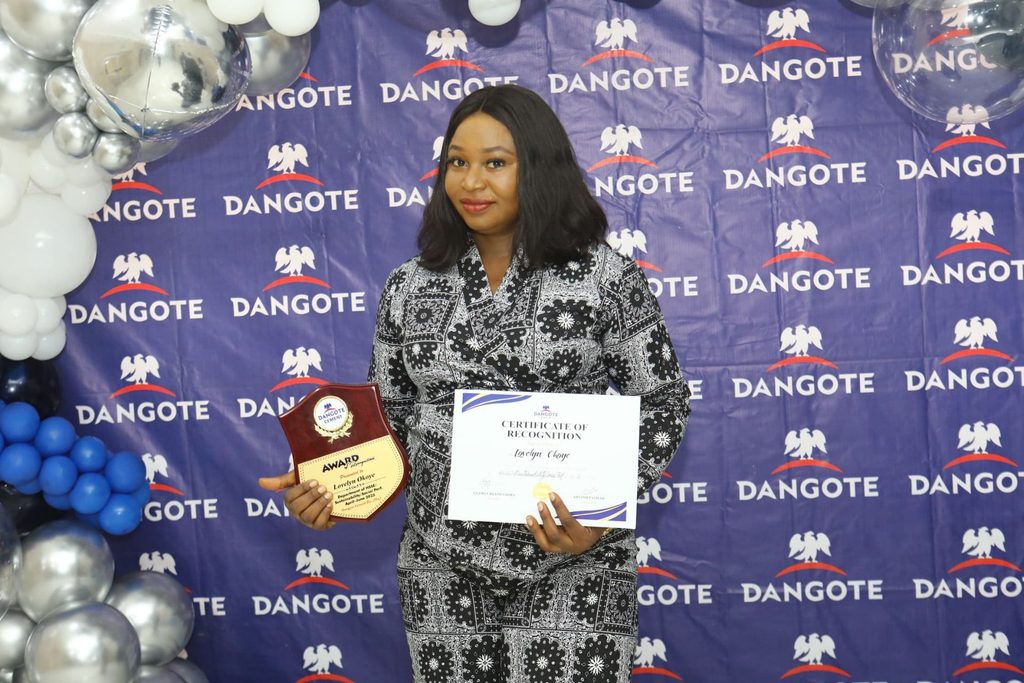
Consequently, Dangote Cement earned an innovative waste management award from the Lagos State Ministry of Environment and Water Resources during her tenure. The company also marked its first International Clean Air Day commemoration under her coordination.
In August 2024 Okoye joined Seven-Up Bottling Company as Senior Sustainability Manager. She brought more than a decade of cross-industry experience into a beverage sector under growing scrutiny for plastic waste and water usage.
Her certifications add further weight to that experience. A certification in Sustainability Studies, covering the Sustainable Development Goals and the law, was also completed at the University of Cambridge, alongside a NEBOSH qualification in occupational health and safety.
Building SBC’s Sustainability Unit From the Ground Up
Once promoted, Okoye did not inherit a ready-made structure. Instead, she built Seven-Up’s Sustainability Unit from scratch, creating the foundation that now drives ESG work across all of the company’s plants. She then crafted the CLEAR Sustainability Strategy, anchoring SBC’s operations on seven priority Sustainable Development Goals aligned with business growth and social impact.
That strategic layer needed systems underneath it. An Environmental and Social Management System, including a comprehensive waste-management policy, was implemented plant-wide, delivering more than ₦200 million in financial gains through structured waste handling.
Similarly, an ESG key performance indicator template was designed and deployed across all plants, giving the company transparent, plant-wide performance tracking for the first time. Furthermore, she developed an Environmental and Social Due Diligence process alongside an ESG Code of Conduct, both aimed at guiding suppliers toward more sustainable practices.
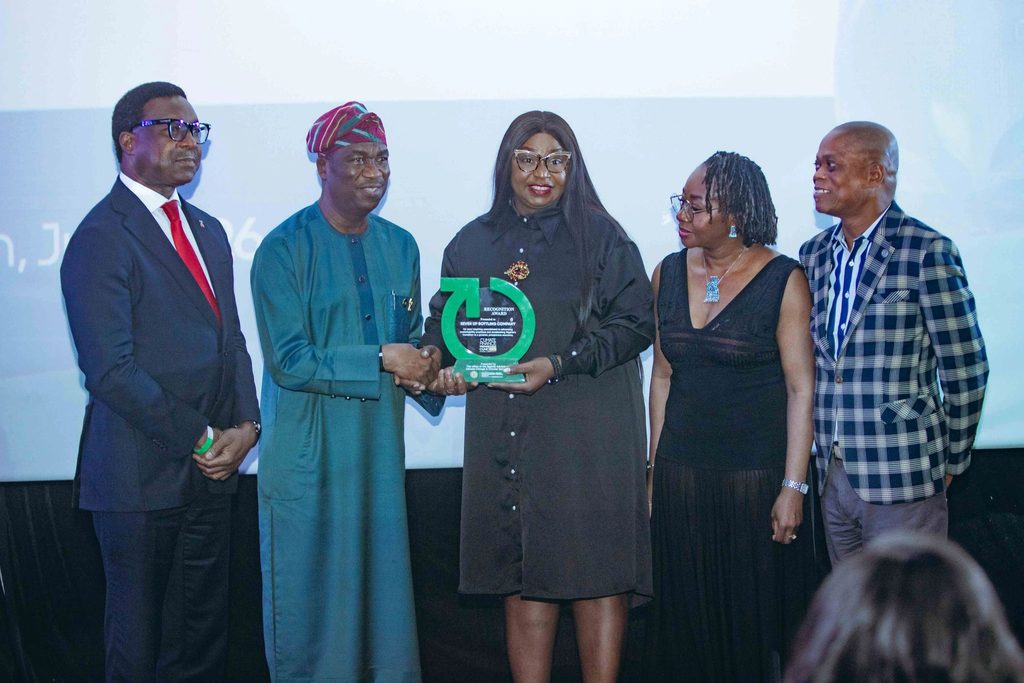
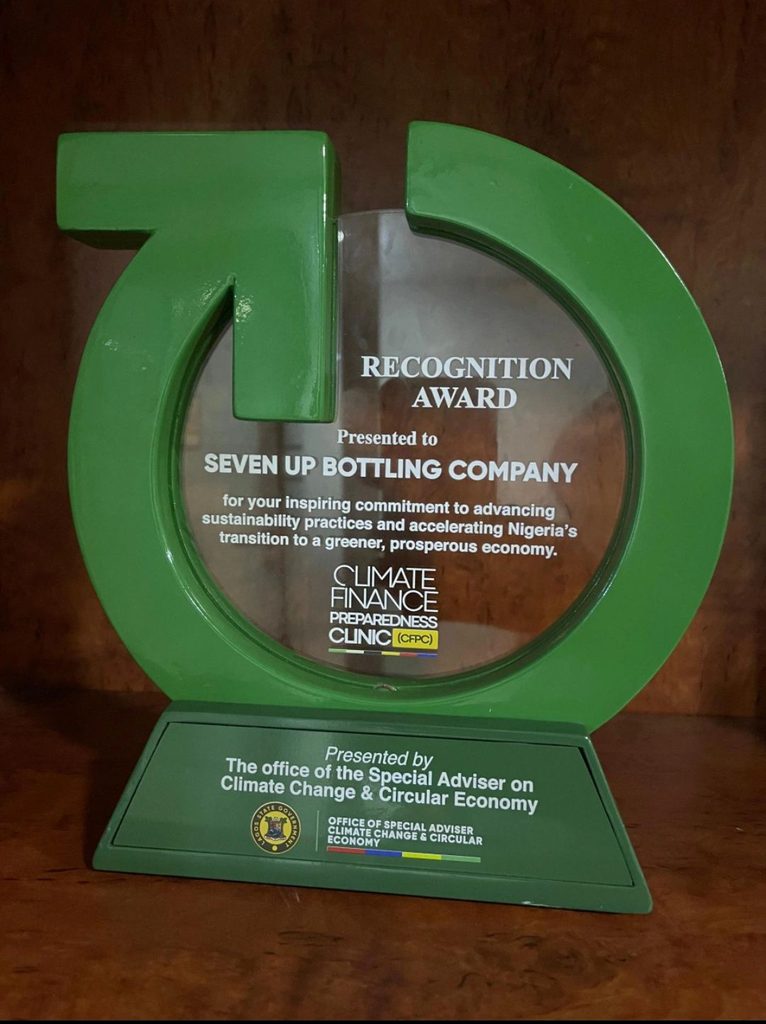
It is activities like these that led to an award at the Industry Awards Night organised by the Office of the Special Adviser to the Lagos State Governor on Climate Change and Circular Economy. The award celebrated Seven-Up Bottling Company’s commitment to advancing sustainability and accelerating Nigeria’s transition to a greener, more prosperous economy.
Community and Culture: Trees, Champions and Circular Wins
Sustainability strategies mean little without people to carry them out. Okoye introduced Sustainability Week and built a network of Sustainability Champions and Volunteers across every plant, embedding ESG thinking into everyday operations rather than leaving it to a single department. She also launched One Staff One Tree, a biodiversity and climate action initiative that makes environmental responsibility personal for each employee.
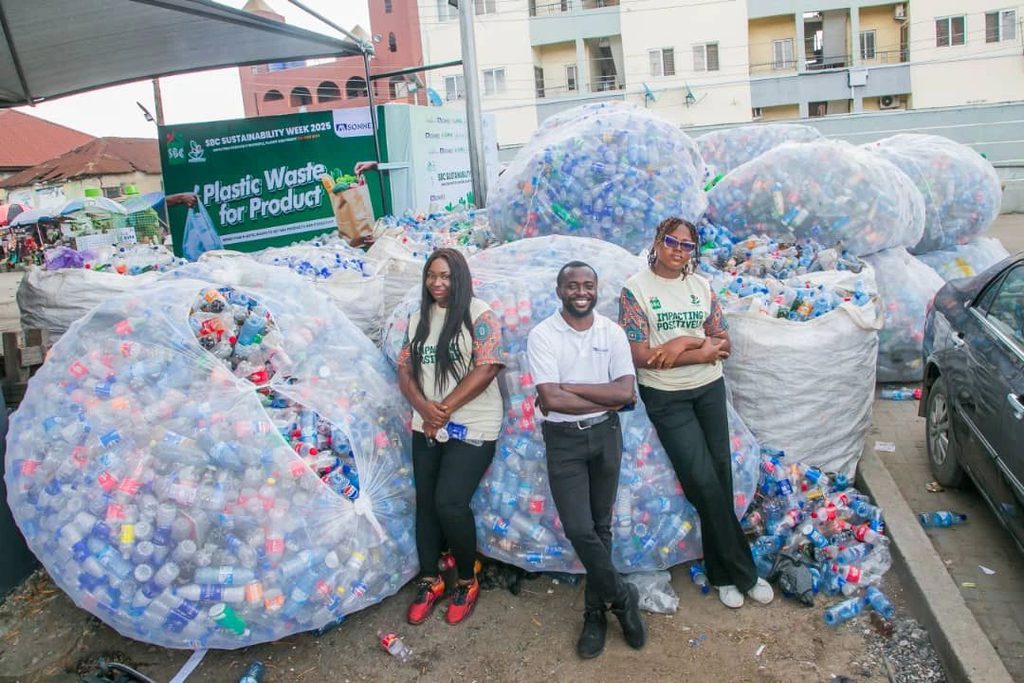
Youth engagement forms another pillar of her work. She led the Green Skills School Challenge in partnership with six of Lagos State’s educational districts, empowering students to upcycle more than 20,000 plastic items. She also championed the Plastic Waste for Product initiative, a circular economy campaign that recovered a record-breaking figure of over four metric tonnes of plastic waste in a single day across host communities.
A Seat at the Industry Table
Okoye’s influence extends beyond SBC’s own plants. She also serves as an executive within the Food and Beverage Recycling Alliance. This industry-wide body coordinates extended producer responsibility for packaging waste across Nigeria’s food and beverage sector. That position places her among the small group of professionals shaping how an entire industry, not just one company, handles post-consumer plastic.
Under her leadership, SBC published its first Annual Sustainability Report, setting a new benchmark for corporate accountability and ESG disclosure within Nigeria’s fast-moving consumer goods space. As a result, the company now has a documented, verifiable record of its environmental and social performance rather than scattered claims.
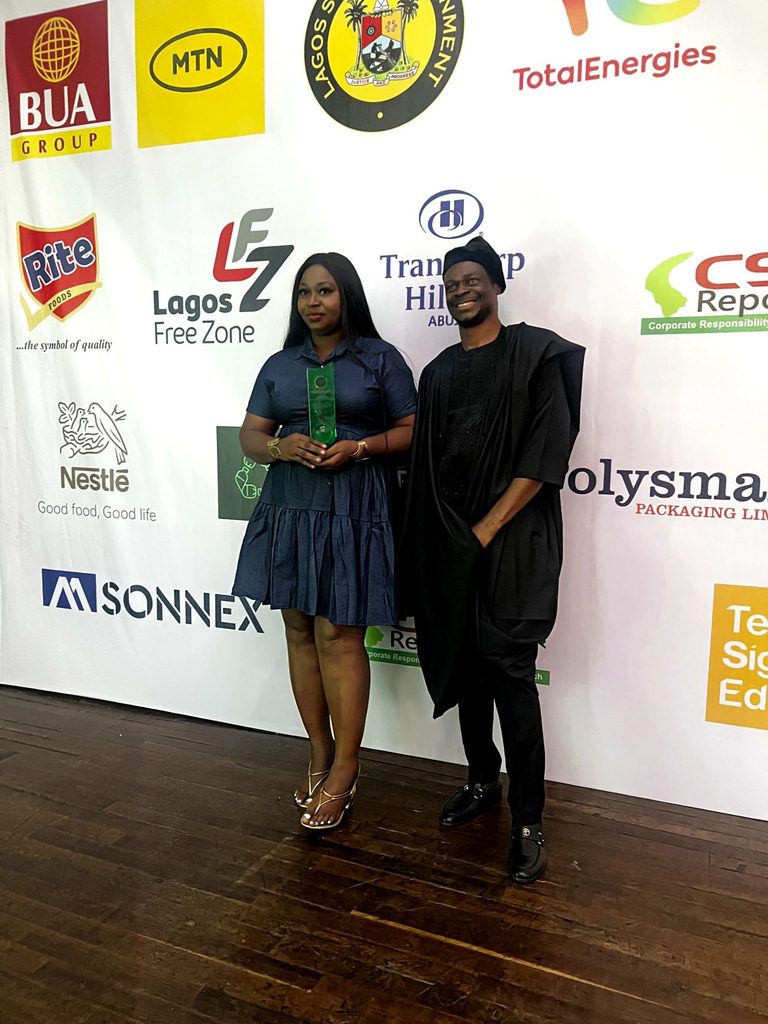
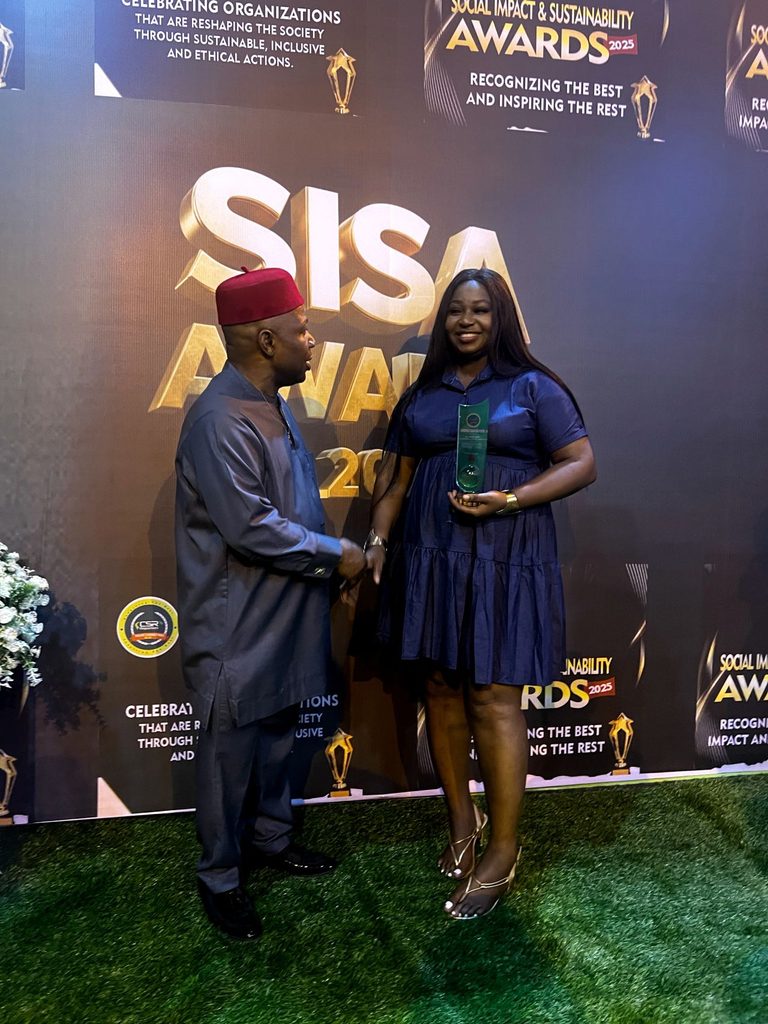
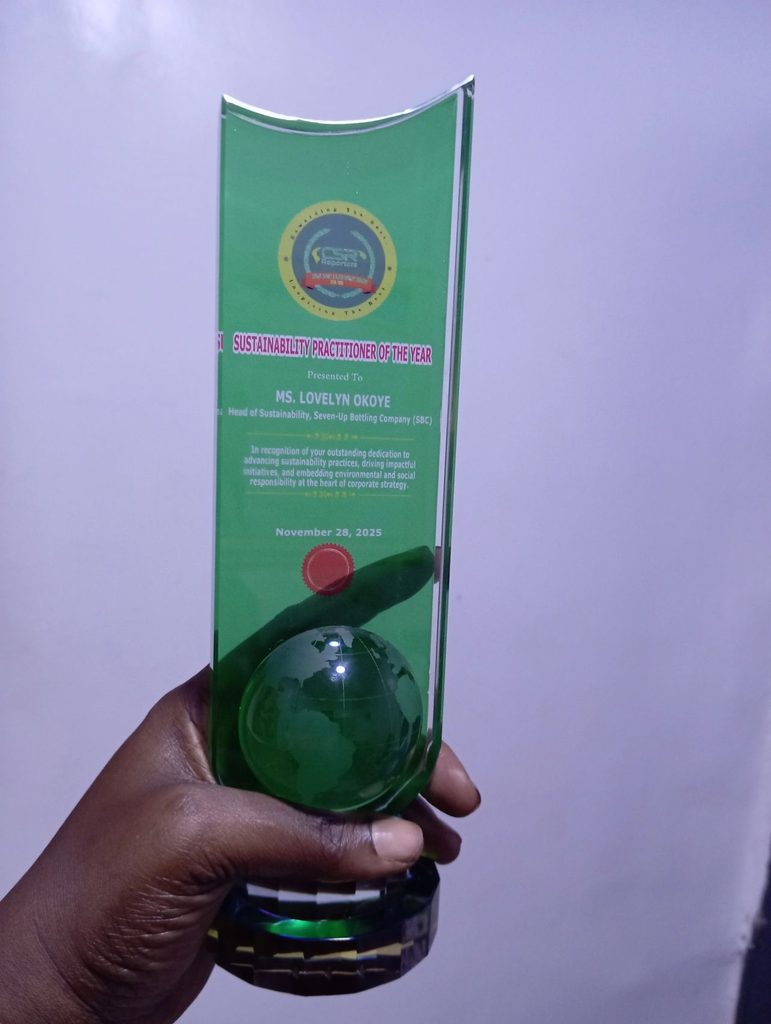
That work earned recognition in 2025, when Okoye was named Sustainability Practitioner of the Year at CSR Reporters’ Social Impact and Sustainability Awards, among other honours received that year.
Why She Matters Now
Nigeria’s corporate sustainability conversation often rewards visibility over substance. Executives who appear at award ceremonies and glossy report launches tend to receive most public attention. However, the harder work happens earlier, inside the systems that generate the numbers those reports eventually publish.
Okoye’s mandate has required her to build those systems from nothing, then translate them into figures that can withstand scrutiny. That is a demanding standard, and many sustainability functions in Nigeria still avoid the rigor it demands.
Similarly, her career, built across cement, consumer goods and now industry-wide advocacy through FBRA, gives her a rare cross-sector view of how Nigerian industry approaches environmental responsibility. As SBC continues expanding its sustainability commitments, her role is likely to grow rather than shrink. Ultimately, that trajectory, combined with her technical background and advocacy work, explains why Lovelyn Okoye is this week’s CSR Personality of the Week.
[give_form id="20698"]