Eche Munonye
N600 Billion, Nine Million Household, and the Question Abuja won't Answer
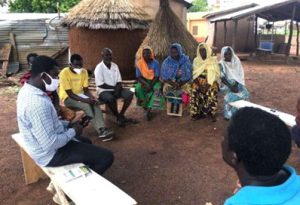
On August 26, 2026, the Minister of Humanitarian Affairs and Poverty Reduction, Dr Bernard Doro, told Nigerians something they were meant to receive as good news: that the Federal Government had disbursed more than N600 billion in cash transfers to “slightly over nine million households” — a figure he then revised, in the same breath, to “about 10 million.” It was framed as proof of a government in motion, a subsidy-removal wound being tended to at scale.
We have questions. Not cynicism for its own sake — questions. Because a claim of this size, made on national television without an accompanying dataset, is not evidence of impact. It is an invoice without a receipt. And CSR Reporters exists precisely for the gap between the invoice and the receipt.
1. Nine Million, Ten Million, Fifteen Million — Which Number Is True?
The minister’s own figure moved mid-sentence. Some outlets reported “over nine million households.” Others, drawing from the same interview, reported “over 10 million.” That is not a rounding difference — it is roughly one million households, each theoretically representing four people, unaccounted for in the space of a single answer.
This would be a footnote if it were the first inconsistency. It isn’t. The programme was originally launched in October 2023 with a target of 15 million households. By the government’s own account, that target has still not been met, three years and N600 billion later — yet the shortfall was not mentioned. Nor was the fact that as recently as May 2025, the government’s public claim was that 2.3 million households had been reached under a revalidation exercise. How does a programme move from 2.3 million verified households to “slightly over nine million” — or “about 10 million” — in fifteen months, without a published account of who was added, how they were verified, and why the earlier figure was so much lower?
A number that cannot hold still within the same press appearance is not a number. It is a talking point.
2. Money Spent, Impact Unmeasured
Dr Doro was candid about one thing: an “impact assessment is underway” to determine what the programme has actually done for poverty. After three years and N600 billion, that admission should have been the headline, not a caveat buried beneath it.
This is not a new pattern. In 2024, the World Bank — the institution that financed this programme’s earlier iteration to the tune of $800 million — found that the cash transfers had little measurable effect on household consumption or employment. That is the funder’s own evaluation. If the government’s response to a documented finding of limited impact is to keep disbursing at scale while an assessment remains permanently “underway,” the burden of proof has shifted. It is no longer on critics to prove the programme has failed. It is on government to prove, with data, that it has worked.
Where is the baseline? Where is the control group? Where is the published methodology for measuring “poverty reduction” as distinct from “cash disbursed”? Spending is not a result. It is an input. Nigerians have been given the input and asked to trust that the result will follow.
3. Who, Exactly, Is on the Register — And Who Verifies It?
Every cash transfer programme is only as credible as the register behind it. Nigeria’s National Social Register has been the weak point of this initiative since before Dr Doro’s ministry existed. On assuming office, the Tinubu government itself rejected the inherited social intervention register over credibility concerns — an admission, from within government, that the list of “poor and vulnerable households” could not be trusted.
Has that credibility problem been solved, or merely inherited by a new register with the same opacity? The Human Rights Writers Association of Nigeria (HURIWA) ran an independent poll of over 50,000 Nigerians in 2025 and found none who had received a transfer or knew a beneficiary personally. That is not proof the programme is fictional — but it is a data point the government has never publicly rebutted with its own beneficiary-level transparency. To this day, there is no publicly searchable list, no state-by-state breakdown, no independent audit trail that a journalist, a legislator, or an ordinary citizen can check a name against.
The National Social Safety-Net Coordinating Office has had to repeatedly warn Nigerians about fake registration portals and scam links impersonating the programme. That confusion is not incidental. It is what opacity produces: a vacuum that fraudsters fill because the government never filled it with verifiable information first.
4. What Happened to the Corruption Probe?
In March 2025, the House of Representatives launched an investigation into the utilisation of the multi-billion-naira Conditional Cash Transfer fund, tracing allocations back to 2016. That probe has not, to public knowledge, produced findings, sanctions, or a closing report. Did it conclude? Did it stall? Was anyone found responsible for the earlier failures — including the well-documented collapse of the 2023 tranche, in which barely 1.5 million of a promised 15 million households were paid, and only 37 percent of those received even a single instalment?
A government cannot cite the scale of a programme as an achievement while the last known legislative inquiry into that same programme’s fund utilisation sits unresolved. Scale without accountability is not an achievement. It is exposure.
5. The Arithmetic Nigerians Deserve to See
Using the government’s own figures — N600 billion across roughly nine to ten million households over three years — the transfer works out to somewhere between N1,650 and N1,850 per household per month, before any adjustment for the inflation that followed the very subsidy removal this programme was designed to cushion. Minister Doro, pressed on whether individual payments were too modest to matter, pushed back “firmly.” Nigerians are entitled to see the arithmetic behind that confidence, not just hear it asserted. A stabilisation payment that does not keep pace with the price shock it was designed to offset is not stabilisation. It is a gesture.
The minister also translated the household figure into “about 40 million Nigerians,” using an assumed average household size of four. That multiplier is doing a great deal of political work for a number that has not been independently verified at the household level in the first place. Extrapolating reach before confirming the base figure is not measurement. It is marketing dressed as demography.
6. Why Launch a New Programme Before Auditing the Old One?
Within days of this disclosure, the government unveiled a fresh $1 billion HOPE-SP initiative, described as a shift “from palliatives to sustainable pathways.” That shift may be genuinely necessary — Nigeria’s poverty crisis does not wait for bureaucratic tidiness. But it raises an obvious question: why commit a new billion-dollar instrument before the impact assessment of the N600 billion instrument it is meant to succeed has even been completed?
Sequencing matters. An administration that moves from one large intervention to the next without closing the accountability loop on the last one is not building a track record. It is building plausible deniability — each new programme becomes the answer to questions about the previous one’s failures, in perpetuity.
What Accountability Would Actually Look Like
CSR Reporters is not asking government to abandon cash transfers. Conditional cash transfer models have demonstrable evidence behind them elsewhere in the world when built on transparent registers and independent evaluation. We are asking for the minimum architecture that would let that evidence apply here:
- A single, consistent, publicly reconciled beneficiary figure — not a number that changes within one interview.
- Publication of the impact assessment methodology before it concludes, not after, so its findings can be checked rather than simply announced.
- A state-by-state, LGA-by-LGA breakdown of the National Social Register, open to independent civil society audit.
- A public closing report on the 2025 National Assembly probe into fund utilisation, with named findings.
- An honest reconciliation of the gap between the original 15-million-household target and whatever figure government now considers current.
None of this is radical. It is the standard against which every credible social protection programme in the world is measured. Nigeria’s poorest households — the ones this programme claims to serve — are the ones who pay when that standard is skipped, not the ones who announce the numbers on television.
CSR Reporters is a pan-African independent accountability and sustainability intelligence platform. If your institution — public or private — is prepared to have its impact claims tested against evidence rather than asserted on a podium, our impact intelligence and advisory work exists for exactly that conversation.
[give_form id="20698"]