Dangote Foundation’s 30,000-Student Scholarship: Can Private Investment Change Nigeria’s Education Story?
 ONYINYECHI NWAIGBA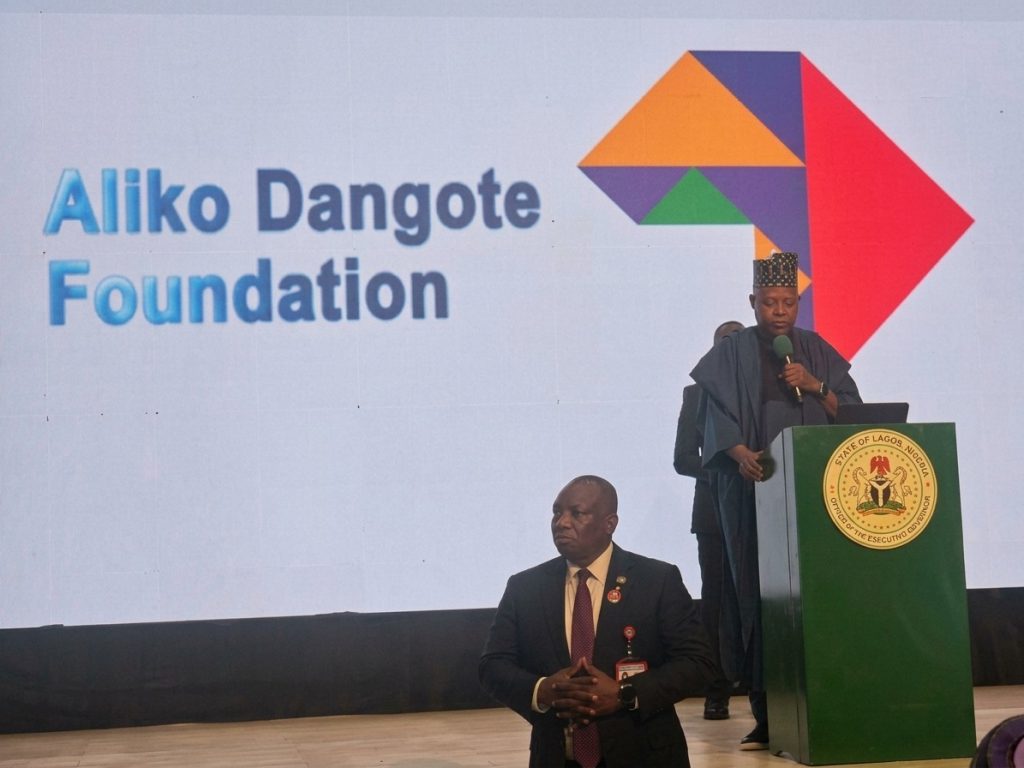
With 30,000 Nigerian undergraduates set to benefit from a new scholarship program, the bigger question is whether private sector investment can help remove one of the biggest barriers to education: the cost of staying in school.
For thousands of Nigerian university students, getting admission is only the beginning of the struggle.
Tuition and other academic costs, accommodation, transportation, textbooks and daily living expenses can turn higher education into a financial burden for families already dealing with rising living costs. For some students, the pressure becomes so severe that remaining in school is no longer guaranteed.
That is why the Aliko Dangote Foundation’s plan to provide scholarships to 30,000 Nigerian undergraduates is more than another corporate social responsibility announcement.
The initiative puts a much larger issue back in focus: who gets the opportunity to complete a university education in Nigeria, and what happens when financial pressure pushes capable young people out?
According to the National Universities Commission (NUC), the first phase of the scholarship program will target 30,000 undergraduate students in Nigerian federal and state universities. The program is scheduled to begin in October 2026 alongside the 2026/2027 academic session and will cover students across all 774 local government areas.
A Scholarship, But Also a Human Capital Investment
The beneficiaries will be students studying Science, Technology, Engineering and Medicine (STEM) and related disciplines.
Applicants are expected to have a minimum CGPA of 2.5, while five per cent of the scholarship quota will be reserved for students living with disabilities. Beneficiaries will also go through a selection process before receiving the award.
The choice of STEM-related disciplines is significant.
Nigeria’s development challenges increasingly require a workforce equipped with technical, scientific and digital skills. From healthcare and engineering to technology, manufacturing, energy and infrastructure, the country needs young people capable of solving increasingly complex problems.
But producing that workforce requires more than telling young Nigerians to study STEM.
It requires creating the conditions that allow them to actually complete their education.
A talented engineering student who leaves university because their family can no longer afford tuition has not simply lost an academic opportunity. Nigeria potentially loses an engineer, innovator, researcher or future employer.
That makes education investment a human capital issue as much as it is a philanthropic one.
The Bigger Dangote Education Commitment
The 30,000 undergraduate scholarships form part of a much larger education support program announced by the Aliko Dangote Foundation.
The foundation unveiled a ₦1 trillion education initiative expected to support more than 1.3 million Nigerian students over 10 years, with ₦100 billion committed annually. The wider program is designed to support education across different levels, including scholarships, technical training and support for girls’ education.
The scale matters because Nigeria’s education challenges are too large to be solved by isolated interventions.
A scholarship can change an individual student’s life. A sustained program reaching students across the country can potentially influence communities, industries and the wider economy.
That is where the CSR conversation becomes more interesting.
The question is no longer simply how much money is being donated?
It becomes what outcomes will the investment create?
Access Is Only the First Step
Scholarships can remove one of the biggest barriers to education, but access alone does not guarantee success.
Students also need quality teaching, functional laboratories, digital resources, safe learning environments, mentorship and pathways into employment.
This is particularly important for STEM students.
A student may have their tuition covered but still struggle to gain practical experience if their institution lacks adequate laboratories or modern equipment. Another may graduate with a degree but find it difficult to transition into the workplace without industry exposure or relevant skills.
This means the long-term impact of the program should not only be measured by the number of scholarships awarded.
It should also be measured by how many students complete their programmes, graduate successfully, secure meaningful employment, pursue further research or create opportunities for others.
Those are the metrics that can turn a scholarship program into a genuine social-impact investment.
Reaching All 774 Local Government Areas
Another notable element is the program’s nationwide ambition.
The NUC says the first phase is expected to cover all 774 local government areas.
That could help move the conversation away from concentrated philanthropy, where opportunities are often clustered around major cities or locations where companies operate.
For students in underserved communities, access to a national scholarship opportunity can be particularly significant.
However, nationwide coverage also creates an important responsibility: transparency.
With tens of thousands of students expected to benefit, the selection process needs to be clear, accessible and verifiable.
Students should know who qualifies, how applications are assessed, when decisions will be made and where legitimate applications can be submitted.
The NUC has indicated that it will engage the Committee of Vice-Chancellors to support awareness of the program and encourage eligible students to apply.
That institutional involvement could help reduce confusion and ensure the opportunity reaches the students it is intended to serve.
Disability Inclusion Matters Too
The decision to reserve five per cent of the scholarship quota for students living with disabilities also deserves attention.
Education inclusion is often discussed in broad terms, but students with disabilities can face additional barriers that extend beyond tuition.
Accessible infrastructure, learning materials, transportation, technology and other forms of support can determine whether a student can participate fully in university life.
A scholarship program that deliberately includes students with disabilities therefore has the potential to broaden the meaning of educational access.
But again, implementation will determine whether the policy translates into meaningful inclusion.
What Should Success Look Like?
For a program of this scale, success should be visible beyond the announcement.
Five or ten years from now, Nigerians should be able to ask:
How many students completed their degrees?
How many entered STEM careers?
How many went into research and innovation?
How many found employment?
How many created businesses or solutions?
How many women and students with disabilities progressed into leadership roles?
And perhaps most importantly, how many beneficiaries went on to create opportunities for others?
These are the questions that move CSR from giving to impact.
The Aliko Dangote Foundation describes its education investment as a long-term commitment to Nigeria’s human capital. That ambition will ultimately be judged not by the size of the announcement but by the lives and opportunities that change because of it.
Nigeria Needs More Than Scholarships
Nigeria’s education challenges cannot be solved by philanthropy alone.
Government remains responsible for building and funding strong public education systems. Universities need better infrastructure, research funding and teaching capacity. Students need affordable accommodation, reliable transport and access to digital resources.
But private-sector interventions can complement these efforts.
Dangote’s scholarship program demonstrates what can happen when corporate resources are directed towards a national development challenge at significant scale.
The opportunity now is to make the intervention part of a broader ecosystem of education, skills, employment and innovation.
Because the ultimate value of helping a young Nigerian stay in university is not simply that one student earns a degree.
It is what that degree allows the person to do afterwards.
For Nigeria, the return could be a stronger workforce, more innovation, better businesses, improved services and a generation better equipped to solve the country’s most difficult problems.
That is why the real story behind 30,000 scholarships is not simply about 30,000 students receiving financial support.
It is about 30,000 potential futures and whether Nigeria can create an environment where those futures are allowed to thrive.
[give_form id="20698"]