ONYINYECHI NWAIGBA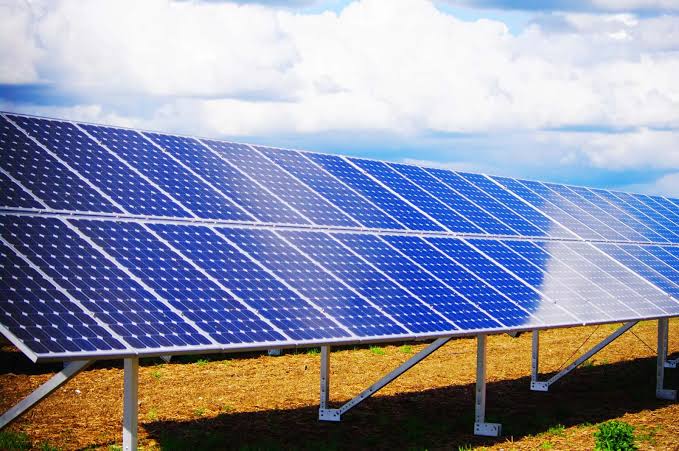
With another 200MW solar project moving into procurement, Niger State is expanding its renewable-energy ambitions. The bigger test will be whether the investment delivers reliable power, jobs, cleaner energy and measurable benefits for communities.
Niger State is setting its sights on a significantly larger role in Nigeria’s renewable-energy future, with the government targeting 1 gigawatt (GW) of solar power capacity by 2030.
The latest step towards that ambition is a proposed 200MW solar power project, for which additional funding has been secured and the bidding process has commenced.
Governor Umaru Bago disclosed the development while receiving a delegation from ALDESA Group, a renewable-energy subsidiary of the China Civil Engineering Construction Corporation (CCECC). Companies interested in executing the project have been invited to submit bids, with proposals expected to go through the state’s procurement process.
On paper, 1GW is an ambitious target.
But the significance of Niger State’s renewable-energy push goes beyond the size of its proposed solar capacity.
For a state with large communities, agricultural activity, industrial ambitions and significant infrastructure needs, reliable electricity can influence almost every part of economic and social development.
The question is therefore no longer simply how much solar capacity can be installed.
It is what that capacity will change for people.
From Solar Projects to Energy Security
Niger State has been exploring alternative energy sources as part of efforts to reduce dependence on the national grid.
In 2025, the state government announced plans to move some public facilities towards alternative power sources, including a proposed 200MW solar park and mini-grid initiatives across local government areas. The government also announced plans to provide solar systems to households.
The latest 1GW target suggests an attempt to take that ambition to a much larger scale.
That matters because unreliable electricity has consequences that stretch far beyond inconvenience.
When homes, hospitals, schools, farms and businesses cannot depend on consistent power, they often turn to diesel and petrol generators. That increases costs, creates additional pollution and places further pressure on household and organisational budgets.
Solar power cannot solve every energy problem on its own, but expanding renewable generation can diversify the state’s energy mix and create a cleaner alternative where the right infrastructure exists.
The Infrastructure Behind the Ambition
One of the most important parts of the development may not be the solar panels themselves.
It is the infrastructure required to connect the electricity to the people and institutions that need it.
The Islamic Development Bank has an active Niger State Solar Energy Development Project, with procurement covering solar PV generation as well as grid interconnection and evacuation infrastructure. The current prequalification notice was issued in September 2026, with submissions due in October.
This is significant because generating electricity is only one part of the energy equation.
Power also needs to be transmitted, distributed and managed effectively.
A large solar installation that produces electricity without adequate evacuation infrastructure or distribution capacity cannot deliver its full development value.
For Niger State’s 1GW ambition to become meaningful, therefore, the supporting infrastructure will be just as important as the headline capacity.
What Could It Mean for Jobs?
Renewable energy is often discussed primarily as a climate solution.
But it is also becoming a jobs and skills conversation.
A growing solar industry requires engineers, technicians, electricians, project managers, construction workers, maintenance specialists and other professionals.
It can also create demand for training institutions and technical programmes capable of preparing young people for the clean-energy economy.
This presents an opportunity for Niger State to connect its energy strategy with youth development.
Instead of treating solar projects as infrastructure delivered by external contractors, the state can ask a bigger question:
How many Nigerians will gain skills from this transition?
That could mean apprenticeships attached to major projects, technical training for young people, partnerships with universities and vocational institutions, and deliberate development of local expertise in installation, maintenance, energy management and other areas.
The long-term value of a renewable-energy investment should not only be measured in megawatts.
It should also be measured in people equipped to participate in the industry those megawatts create.
Communities Must See the Benefits
Another critical issue is whether renewable-energy investment will translate into better everyday lives.
Niger State’s solar ambitions should ultimately be connected to tangible improvements in communities.
That could mean more reliable electricity for healthcare facilities, improved learning environments in schools, better water systems, more productive agricultural operations and stronger public infrastructure.
The state’s own previous plans have already included solar solutions for public facilities and households, showing that the renewable-energy strategy is not limited to large-scale power generation.
But delivery matters.
A project can be labelled a clean-energy success while communities continue to struggle with unreliable electricity if the infrastructure does not reach them effectively.
That is why transparency, maintenance and measurable outcomes will be essential.
The Climate Case Is Also an Economic Case
Niger State’s renewable-energy ambitions arrive at a time when Nigeria is under growing pressure to expand electricity access while reducing dependence on more carbon-intensive energy sources.
Solar power offers an opportunity to address both challenges.
It can support cleaner electricity generation while helping communities and institutions reduce their dependence on fuel-powered generators.
But the climate benefits should not be separated from economic development.
A successful energy transition should help create a more resilient economy one where hospitals can operate more reliably, schools have electricity, communities have better access to essential services and industries can plan around more dependable power.
That is where renewable energy becomes more than an environmental policy.
It becomes development infrastructure.
The 1GW Question
Niger State’s 1GW target is ambitious, but targets are ultimately only as meaningful as the systems built to achieve them.
The state will need sustained financing, credible procurement, strong project management, adequate transmission infrastructure and long-term maintenance.
It will also need to ensure that projects are implemented transparently and that communities understand how they will benefit.
There is also a need for consistent measurement.
By 2030, Nigerians should be able to look beyond the number of megawatts installed and ask:
How many communities gained reliable electricity?
How many jobs were created?
How many young people were trained?
How much diesel and petrol consumption was displaced?
How much emissions were avoided?
How much did access to electricity improve healthcare, education and livelihoods?
Those are the metrics that can turn a renewable-energy announcement into a credible social-impact story.
Niger State’s Bigger Opportunity
The race towards 1GW could position Niger State as an important player in Nigeria’s clean-energy transition.
But the opportunity is bigger than becoming a state with a large solar portfolio.
If implemented properly, the investment could help build a local clean-energy workforce, improve public services, strengthen energy security and support economic activity while contributing to Nigeria’s broader climate goals.
That is also where the private sector has a role to play.
Renewable-energy companies, financiers, technical institutions and development partners can bring capital and expertise. Government, meanwhile, must provide the policy environment, infrastructure and accountability needed to ensure that investment produces lasting value.
The real measure of success will not be the number on a project document.
It will be what Nigerians experience on the ground.
Niger State may be targeting 1GW of solar by 2030. The more important target should be how many lives that 1GW can improve.
[give_form id="20698"]