ONYINYECHI NWAIGBA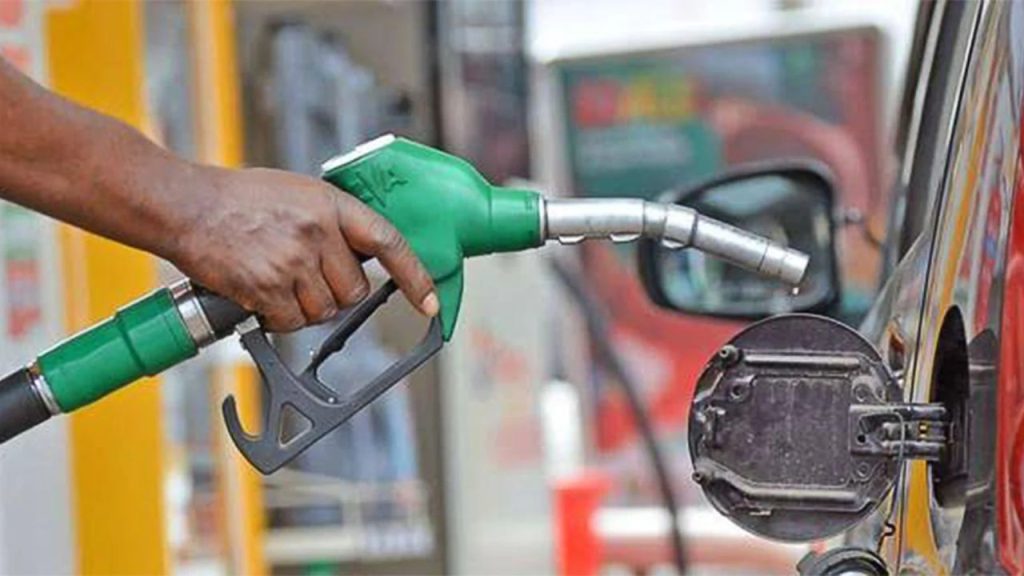
Across the global economy, energy pricing continues to play a defining role in shaping inflation, household welfare, and national economic stability. In recent months, rising fuel costs have intensified pressure on vulnerable, import dependent economies, where fluctuations in global oil markets often translate directly into domestic hardship.
Nigeria, Africa’s largest economy and one of the continent’s most populous nations, has recently experienced a significant adjustment in petrol pricing, estimated at around 70%. This development has triggered renewed concerns about cost-of-living pressures, transport affordability, business sustainability, and broader economic resilience.
While energy price volatility is not new, the scale and speed of recent increases are amplifying existing structural vulnerabilities, particularly for low-income households and small enterprises that rely heavily on fuel-driven transportation and power generation.
The Rising Cost of Energy and Its Global Context
Energy markets have remained highly volatile due to a combination of geopolitical tensions, supply chain disruptions, currency fluctuations, and shifting global demand patterns (International Energy Agency). For many developing economies, especially those dependent on imported refined petroleum products, these global shifts translate into immediate domestic consequences.
An estimated multi-billion-dollar increase in fuel import burdens has been projected across vulnerable economies, reflecting the scale of exposure to international oil price movements. Countries without strong domestic refining capacity or diversified energy sources are particularly affected, as they must absorb global price shocks with limited buffers.
In this context, Nigeria’s recent fuel price adjustment is part of a broader global energy recalibration that continues to reshape economic realities across Africa, Asia, and parts of Latin America.
Nigeria’s Fuel Price Adjustment and Domestic Impact
The recent increase in petrol prices in Nigeria has had a rapid and visible impact across multiple sectors of the economy. Transportation costs have risen significantly in many urban and semi-urban areas, affecting commuting patterns, logistics operations, and the distribution of goods and services.
For households, particularly those in lower-income brackets, the immediate effect has been a reduction in disposable income. A higher proportion of earnings is now being allocated to transportation and essential goods, leaving less room for savings, education, healthcare, and other basic needs.
Small and medium-sized enterprises (SMEs), which form the backbone of Nigeria’s informal and formal economy, are also experiencing heightened operational costs. Many of these businesses rely on petrol or diesel generators due to inconsistent electricity supply, meaning fuel price increases directly affect production costs and service delivery.
As a result, some businesses have begun adjusting prices, reducing output, or in some cases, scaling down operations entirely in response to shrinking profit margins.
Inflationary Pressures and Cost of Living Concerns
One of the most immediate consequences of rising fuel costs is inflationary pressure. In economies like Nigeria, where transportation is central to the movement of goods, fuel price increases often trigger a chain reaction across multiple sectors.
Food prices, in particular, are highly sensitive to transportation costs. As fuel becomes more expensive, the cost of moving agricultural produce from rural farming communities to urban markets increases. This leads to higher retail prices for essential food items, further exacerbating food insecurity concerns among vulnerable populations.
Similarly, logistics and supply chain operations face increased overheads, which are frequently passed on to consumers. Over time, this contributes to a broader rise in the general cost of living, affecting both urban and rural households.
Impact on Vulnerable Populations
The burden of rising fuel costs is not distributed evenly. Low-income households, informal workers, and individuals in the gig economy are disproportionately affected.
For many of these groups, income levels remain relatively fixed while expenses fluctuate with market conditions. This creates a widening gap between earnings and living costs, increasing economic vulnerability.
Transport-dependent workers, such as traders, artisans, delivery workers, and daily wage earners, are among the hardest hit. In many cases, higher commuting costs reduce daily profit margins or force individuals to limit their mobility, directly affecting productivity and income generation.
Women and youth, who often represent a significant portion of informal sector workers, are also particularly exposed to these shocks, highlighting the gendered and generational dimensions of energy poverty.
Business Environment and SME Resilience
Small and medium-sized enterprises play a crucial role in Nigeria’s economic ecosystem, contributing significantly to employment and GDP. However, they are also highly sensitive to energy cost fluctuations.
Many SMEs rely on self-generated power due to inconsistent grid electricity supply. This dependence on fuel-powered generators means that rising petrol prices directly impact operational sustainability.
Businesses in retail, hospitality, manufacturing, and logistics have all reported increased overhead costs. In response, some are reducing operating hours, adjusting pricing strategies, or seeking alternative energy solutions where feasible.
However, access to affordable financing for energy transition remains a significant challenge, limiting the ability of many SMEs to adopt cleaner or more efficient energy systems.
Broader Development and Policy Implications
From a development perspective, rising fuel costs highlight the urgent need for structural reforms in energy production, distribution, and consumption.
Experts emphasize that long-term economic resilience depends on reducing over-reliance on imported refined fuels and strengthening domestic energy capacity. This includes investments in local refining infrastructure, renewable energy expansion, and improved energy efficiency across sectors.
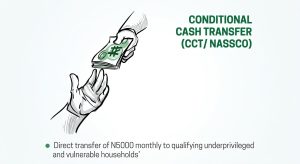
In addition, social protection mechanisms are increasingly seen as essential to cushioning vulnerable populations from sudden economic shocks. Targeted subsidies, transport support schemes, and food security interventions are among the policy tools being discussed in response to rising energy costs.
Without such interventions, there is a risk that energy inflation could deepen inequality and slow progress toward sustainable development outcomes.
The Path Toward Energy Transition
The current situation also reinforces global conversations around energy transition and sustainability. As countries seek to reduce vulnerability to fossil fuel price volatility, renewable energy adoption is gaining increased attention.
Solar energy, mini-grid systems, and decentralized power solutions present viable alternatives for reducing dependence on petrol and diesel in the long term. For economies like Nigeria, where sunlight is abundant, renewable energy represents not only an environmental solution but also an economic stabilizer.
However, scaling these solutions requires coordinated investment, policy support, and private sector participation. Bridging the financing gap remains a key challenge.
Futher Reading: How Solar Plan Signals New Energy Opportunities?
[give_form id="20698"]