ROSEMARY IMOBHIO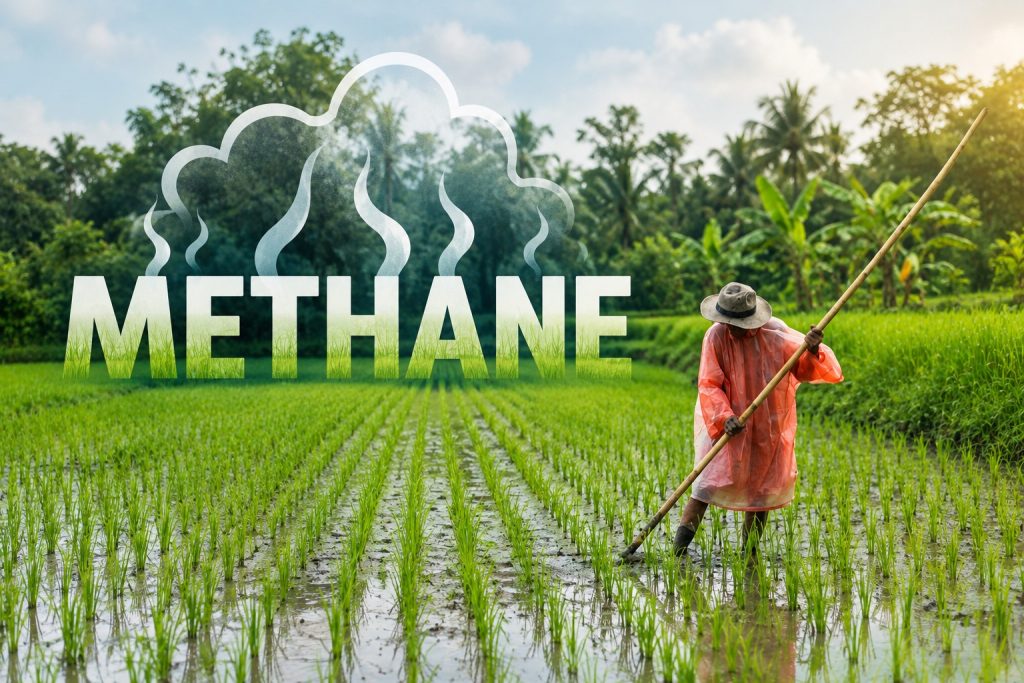
Google has agreed to buy 1 million carbon credits from climate technology startup Mitti Labs over the next four years, supporting efforts to help more than 70,000 smallholder farmers in India reduce methane emissions from rice farming.
In simple terms, the deal will help pay for changes in the way rice is grown. Those changes are expected to reduce the amount of methane released from rice fields. The reduction in emissions will then be measured and turned into carbon credits, which Google will buy.
It is Google’s largest carbon credit deal focused on reducing so-called superpollutants, which are gases that can contribute significantly to global warming.
So, What Is A Carbon Credit?
A carbon credit is essentially a certificate representing a reduction of greenhouse gas emissions. One carbon credit generally represents one tonne of carbon dioxide equivalent that has been reduced, avoided or removed through a project.
Companies can buy these credits to support projects that reduce emissions. In Google’s case, the company is buying credits connected to a project that aims to reduce methane from rice farming. That means the deal is not simply about buying credits. It is also about financing a real-world project that is expected to reduce emissions.
Why Rice Farming Matters
Rice is one of the world’s most important food crops. However, the way it is commonly grown can create a significant climate problem.
Rice is often grown in fields that remain flooded for long periods. When the soil stays underwater, there is little oxygen available in the soil. This creates conditions that allow methane-producing microorganisms to thrive.
Methane is particularly important because it traps much more heat than carbon dioxide over a shorter period. According to the Intergovernmental Panel on Climate Change, methane and other short-lived climate pollutants have contributed significantly to global warming. Cutting these emissions can therefore help slow warming in the near term.
Rice cultivation is responsible for about 12% of global methane emissions. It is also a water-intensive crop, creating another challenge in areas where water supplies are already under pressure.
The Farming Change Behind The Deal
Mitti Labs is working with farmers to introduce a method known as Alternate Wetting and Drying, or AWD. The idea is relatively simple. Instead of keeping rice fields continuously flooded, farmers allow the fields to dry for periods before flooding them again.
According to Mitti Labs, this interrupts the conditions that produce methane in the soil. The company says the method can reduce methane emissions from rice fields by about 50% while also cutting irrigation water use by nearly 40%, without reducing yields.
That means the same farming change could deliver two benefits: less methane and less water use. Mitti Labs plans to introduce the practice across more than 100,000 hectares of rice fields in India by 2030.
How Do They Know The Emissions Were Reduced?
This is one of the most important parts of any carbon credit project. A company cannot simply say, “We reduced emissions,” and create credits based on that claim. The reduction has to be measured and verified.
Mitti Labs says it uses satellite technology, including NASA-enabled satellite data, together with information collected directly from farms to track the changes. The data is intended to show whether farmers are actually adopting the new water-management method and whether the expected reduction in methane emissions is taking place.
This measurement is important because the value of a carbon credit depends on being able to demonstrate the environmental benefit behind it.

What Google Is Actually Buying
Under the agreement, Google will purchase 1 million carbon credits generated by the rice farming projects. The companies say the projects will eventually deliver the equivalent of 1 million tonnes of carbon dioxide removal when the climate impact is measured over 100 years.
Using a shorter 20-year period, the companies estimate the climate impact at about 3 million tonnes of CO2 equivalent. The projects are also expected to save about 1.5 trillion litres of water.
For Google, the agreement forms part of a broader strategy to support technologies and projects that can reduce greenhouse gas emissions.
The company has also committed to spending at least $50 million by 2030 on projects targeting methane, fluorinated gases and other non-CO2 greenhouse gases through its Superpollutant Action Initiative.
Why Google Is Focusing On Methane
Carbon dioxide usually receives the most attention in discussions about climate change. However, methane presents a different opportunity. Methane does not remain in the atmosphere for as long as carbon dioxide, but it is much more powerful at trapping heat while it is there.
That means reducing methane emissions can have a relatively quick effect on the rate of warming. For Google, the Mitti Labs deal therefore fits into a strategy that looks beyond carbon dioxide to other gases that are driving climate change.
Google Chief Sustainability Officer Kate Brandt said the partnership would help reduce methane emissions while saving water and supporting smallholder farmers. Mitti Labs co-founder Xavier Laguarta similarly described reducing methane from rice farming as one of the strongest opportunities to slow near-term warming.
What The Deal Means Beyond The Numbers
The significance of the agreement goes beyond Google’s purchase of 1 million credits. It shows how the carbon market can be used to direct private money towards changes that might otherwise be difficult for farmers to finance.
For the farmers involved, the project is about changing how water is managed in rice fields. While for Mitti Labs, it is a climate project that generates measurable emissions reductions. For Google, it provides access to carbon credits while supporting a project designed to reduce methane.
However, the credibility of the arrangement will ultimately depend on measurement. The more clearly a project can demonstrate that emissions were actually reduced, the stronger the case for the carbon credits it produces. That makes the satellite monitoring, field data and verification systems behind the Mitti Labs project just as important as the headline figure of 1 million credits.
The deal also highlights a wider point about climate action. Cutting emissions does not always require completely new industries or technologies. Sometimes, it can involve changing an existing practice in a way that produces environmental and economic benefits at the same time.
In this case, a different approach to growing one of the world’s most important food crops could mean less methane, less water use and new financing for farmers. For Google, that makes the rice fields of India an important part of its growing effort to tackle some of the gases contributing to global warming.
Could Africa Do The Same?
The Google-Mitti Labs deal also raises a bigger question for Africa. Can carbon markets help finance similar emissions-reduction projects on the continent? The answer is potentially yes.
Africa has opportunities to generate carbon credits from projects involving clean cooking, renewable energy, agriculture, forestry, waste management and other activities that can produce measurable emissions reductions. In fact, carbon finance is already helping some clean cooking companies expand access to cleaner technologies across the continent.
Nigeria is also building the framework for a more structured carbon market. The country’s National Carbon Market Framework, approved in 2025 and formally unveiled in 2026, provides a pathway for developing both voluntary carbon markets and mechanisms linked to the Paris Agreement.
Read Also: Nigeria Carbon Market: Which Industries Gain First?
For Nigerian businesses, that could eventually create opportunities on both sides of the market. A company could buy eligible carbon credits to support emissions-reduction projects. Alternatively, a company could develop its own qualifying project, measure the emissions it reduces and potentially generate carbon credits from that reduction.
For example, a manufacturing company that significantly cuts emissions by changing its energy source, improving energy efficiency or finding a cleaner way to manage industrial waste could potentially create a carbon project. If the emissions reduction is measurable, independently verified and meets the relevant market requirements, those reductions could have financial value.
That does not mean companies can simply pay for credits and continue polluting without changing their operations. Carbon credits work best as part of a broader emissions-reduction strategy, rather than as a substitute for cutting pollution at the source. That is perhaps the bigger lesson from Google’s deal.
The opportunity is not simply in selling carbon credits. It is in finding practical ways to reduce emissions, proving that those reductions happened and creating a market that can bring more money into projects capable of delivering real environmental benefits.
For Africa, and particularly for Nigeria as its carbon market develops, that could turn climate action from an environmental cost into a new source of investment.
Stay with CSR Reporters for more stories on the business, money and climate impact behind Africa’s changing carbon market.
[give_form id="20698"]