ONYINYECHI NWAIGBA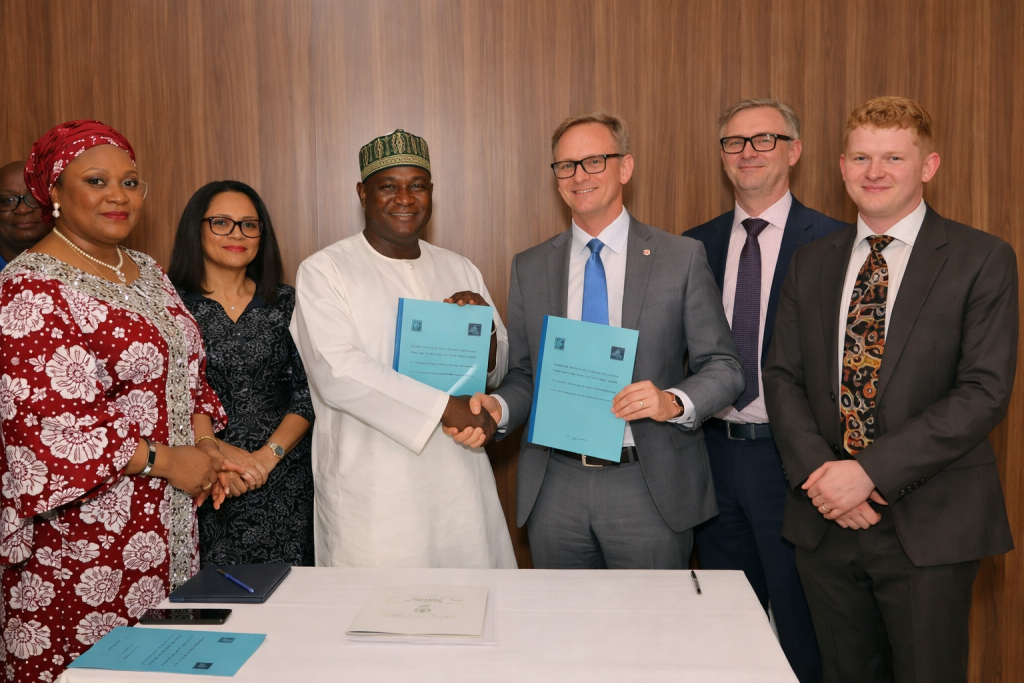
Nigeria and the Kingdom of Denmark have reaffirmed their commitment to transforming the country’s livestock sector through a strengthened strategic partnership aimed at improving food security, advancing agricultural innovation, and building a more resilient and competitive livestock value chain.
The renewed collaboration was formalised through a Letter of Intent for Phase II of the Strategic Sector Cooperation (SSC) Program on Livestock Production, signed between Nigeria’s Federal Ministry of Livestock Development and Denmark’s Ministry of Food, Agriculture and Fisheries.
The agreement marks a significant step in both countries’ efforts to modernize Nigeria’s livestock industry, improve animal health systems, strengthen food safety frameworks, and unlock new opportunities for productivity and investment across the agricultural value chain.
At a time when Nigeria continues to grapple with rising food demand, import dependence, and pressure on agricultural systems, the partnership is being positioned as a strategic lever for long-term transformation.
From Policy Dialogue to Practical Implementation
Speaking during the signing ceremony in Abuja, the Minister of Livestock Development, Idi Mukhtar Maiha, described the agreement as a transition from institutional collaboration to implementation-driven outcomes that directly impact farmers, processors, regulators, and consumers.
According to him, the first phase of the Strategic Sector Cooperation program laid a strong foundation through capacity building, technical exchange, and institutional strengthening across key government agencies and livestock-related institutions.
He noted that more than 100 Nigerian officials have already benefited from specialised training programmes covering food and feed safety, animal disease surveillance, antimicrobial resistance management, climate adaptation strategies, and veterinary regulatory systems.
These interventions have begun to shape a more coordinated and technically equipped livestock governance structure capable of responding to emerging challenges in the sector.
The Minister further disclosed that one of the major outcomes of the partnership is the launch of a joint antimicrobial resistance pilot programme currently being implemented in Oyo and Kano States. The initiative is expected to strengthen Nigeria’s capacity to monitor, prevent, and manage the spread of antimicrobial resistance in livestock production systems.
A Shift Toward Implementation and Field Impact
The Danish Ambassador to Nigeria, Jens Ole Bach Hansen, noted that the second phase of the programme will move beyond institutional training and focus more on field-level implementation and measurable impact.
He explained that the new phase is designed to strengthen disease prevention systems, improve biosecurity, enhance surveillance mechanisms, and provide direct support to livestock farmers and value chain actors.
According to him, the goal is to ensure that technical cooperation between both countries translates into tangible improvements in productivity, animal health outcomes, and overall sector efficiency.
This shift reflects a broader policy direction aimed at ensuring that development partnerships deliver real economic and social value, particularly for rural communities and smallholder farmers who depend heavily on livestock production for livelihoods.
Strengthening Food Safety and Public Health Systems
Also speaking at the event, the Director of Food Safety and Applied Nutrition at the National Agency for Food and Drug Administration and Control (NAFDAC), Eva Edwards, reaffirmed the agency’s commitment to deepening collaboration in key areas of livestock governance.
These include feed management systems, food safety standards, traceability frameworks, veterinary drug regulation, and data sharing mechanisms.
She emphasised that strengthening these systems is critical not only for improving domestic food safety outcomes but also for ensuring that Nigeria’s livestock products meet international standards required for global trade competitiveness.
Improved traceability and regulatory compliance are expected to enhance consumer confidence, reduce risks associated with foodborne diseases, and support the long-term sustainability of Nigeria’s livestock industry.
A Strategic Response to Nigeria’s Livestock Challenges
Nigeria’s livestock sector remains one of the largest in Africa, yet it is characterised by low productivity, limited technological adoption, disease outbreaks, and heavy reliance on traditional production systems.
Despite having over 20 million cattle and millions of sheep and goats, domestic production still falls short of national demand, particularly in dairy, where Nigeria continues to import a significant share of its consumption needs.
Recent government projections indicate that the country spends billions of dollars annually on food imports, with dairy alone accounting for a major portion of foreign exchange outflows.
Against this backdrop, the Nigeria–Denmark partnership is being viewed as part of a broader strategy to close production gaps, reduce import dependency, and build a more self-sufficient agricultural economy.
The collaboration aligns with Nigeria’s ongoing livestock transformation agenda, which aims to increase productivity through improved breeding systems, enhanced pasture development, modern disease control frameworks, and investment in livestock infrastructure.
Building a More Competitive Livestock Economy
Beyond food security, the partnership is expected to contribute significantly to economic diversification and job creation within the agricultural sector.
Livestock development has been identified as a key driver of rural employment, agribusiness expansion, and value chain development, particularly in areas such as dairy processing, meat production, animal feed manufacturing, and veterinary services.
The Danish Veterinary and Food Administration, which serves as Denmark’s technical partner in the programme, has been supporting Nigeria through expertise in feed handling, animal registration systems, disease management, veterinary medicine regulation, and food safety risk management.
These areas are considered critical for building a modern livestock economy capable of attracting private sector investment and integrating into global value chains.
Institutional Strengthening and Cross Sector Collaboration
The partnership also reflects a broader inter-agency collaboration model involving key Nigerian institutions such as NAFDAC, veterinary authorities, and relevant ministries.
Representatives from the Danish Veterinary and Food Administration commended Nigerian institutions for their commitment to the first phase of the programme, noting that strong institutional engagement has been a key driver of its success.
They expressed confidence that the second phase would deliver even greater impact through closer coordination, improved implementation structures, and expanded technical support to farmers and agribusiness operators.
The programme is also expected to strengthen Nigeria’s national systems for animal health monitoring, disease surveillance, and food safety enforcement.
Driving Innovation in Livestock Production
One of the central pillars of the partnership is agricultural innovation, particularly in livestock production systems.
This includes the introduction of improved breeding techniques, better pasture management systems, climate-resilient livestock practices, and data-driven approaches to animal health monitoring.
The collaboration also supports Nigeria’s ambition to transition toward a greener and more sustainable livestock sector that balances productivity with environmental responsibility.
By integrating innovation and science-based practices into livestock production, both countries aim to reduce inefficiencies, improve yields, and ensure long-term sector sustainability.
A Long Term Vision for Food Security
The Nigeria–Denmark livestock partnership comes at a time when food security has become a central policy concern for the Nigerian government.
With a rapidly growing population, rising demand for animal protein, and increasing pressure on agricultural systems, stakeholders say strategic partnerships such as this are essential for building resilience.
The agreement is expected to contribute to improved livestock productivity, reduced disease outbreaks, enhanced food safety systems, and stronger value chains that benefit both producers and consumers.
Ultimately, the partnership reflects a shared vision between Nigeria and Denmark to build a more sustainable, productive, and competitive livestock sector capable of supporting economic growth, job creation, and long-term food security.
See: Dangote Commits $4B in Ethiopia to Drive Africa’s Food Security
Conclusion
As Nigeria intensifies efforts to modernise its agricultural sector, the deepening of strategic partnerships such as the one with Denmark signals a shift toward more structured, results-oriented development cooperation.
While challenges remain, particularly in scaling innovation and ensuring implementation at the grassroots level, stakeholders believe the renewed collaboration offers a practical pathway toward transforming Nigeria’s livestock industry.
With stronger institutions, improved technical capacity, and targeted investments in innovation, the partnership is expected to play a key role in shaping the future of food security and agricultural development in Nigeria.
[give_form id="20698"]