Rent Is Rising Because Someone Wants It To: Nigeria’s Housing Crisis and the Cement Industry’s Silent Hand
 Eche Munonye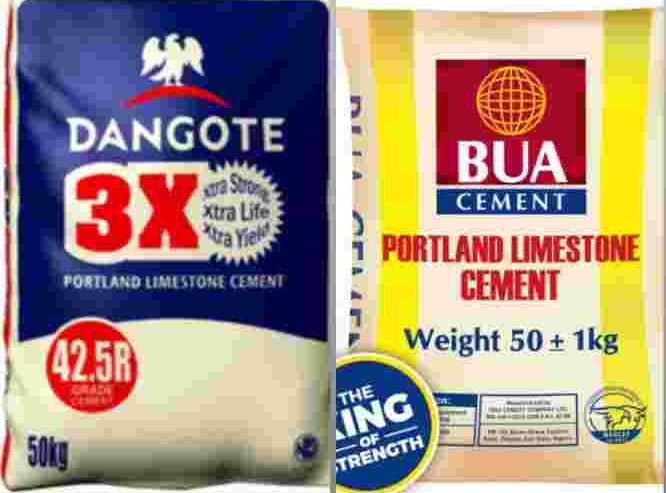
Rent Is Rising Because Someone Wants It To: Nigeria's Housing Crisis and the Cement Industry's Silent Hand
Nigerian tenants have watched rent become the most unforgiving line item in household budgets. In July 2026, the National Bureau of Statistics recorded rent inflation at 33.8 percent, up from 14.79 percent the previous month — a jump so sharp it moved in the opposite direction of headline inflation, which actually eased over the same period. Across Lagos, Abuja and now fast-growing secondary cities like Ibadan, tenants describe rent reviews of 50, 100, even 200 percent within a single lease cycle. A two-bedroom flat that cost a family one million naira a year ago now costs two. This is not gradual adjustment. It is a market in which the ordinary tenant has stopped being a customer and become a target.
The easy explanation is the one everyone reaches for first: landlords and agents. And it is true — opportunistic upward reviews, informal advance-payment demands and the absence of enforceable rent regulation have allowed many landlords to price tenants out with no real recourse. CSR Reporters does not dispute this. But an accountability platform’s job is to follow the chain past the most visible actor to the ones who set the conditions everyone else is reacting to. And when you follow Nigeria’s housing cost chain upstream, it does not stop at the landlord’s gate. It runs straight into the cement factory.
A BUILDING MATERIAL PRICED LIKE A LUXURY IMPORT
Nigeria sits on some of the largest limestone deposits in West Africa — the primary raw material for cement — and hosts an industry with installed production capacity of roughly 60 to 65 million metric tonnes a year, dominated by three producers: Dangote Cement, BUA Cement and HBM Nigeria (formerly Lafarge Africa). Domestic consumption is estimated at only 25 to 30 million tonnes annually. By the industry’s own numbers, Nigeria produces roughly twice what it uses and exports the surplus to Ghana, Cameroon, Niger and beyond. This is, on paper, a textbook case for abundant, competitively priced supply.
That is not what Nigerians experience at the point of purchase. A 50-kilogramme bag of cement sold for between 9,300 and 9,700 naira in January 2026. By July, the Federal Competition and Consumer Protection Commission found prices had climbed to between 13,000 and 15,000 naira in parts of the country — an increase of more than 50 percent in seven months, layered directly on top of the construction-cost inflation already driving landlords to raise rent to match “replacement value.” The FCCPC’s own preliminary findings, released this month, describe the pattern plainly: prices in Nigeria significantly higher than in comparable African markets, despite the country’s abundant limestone deposits, large installed capacity and reported supply surplus.
A country that produces twice the cement it consumes, sitting on some of the region’s richest limestone deposits, should not be one of the most expensive places in Africa to buy a bag of it. That is not a market outcome. It is a governance question.
THE CONTINENTAL COMPARISON NIGERIA CANNOT EXPLAIN AWAY
The regulator’s own market intelligence, corroborated by independent reporting, lays out the gap in stark terms. A bag of cement in Kenya sells for the equivalent of roughly 5.40 US dollars; in Tanzania, about 4.80 dollars. Togo — a country with no limestone deposits of its own, dependent on imported clinker — still manages to sell cement at around 6.75 dollars a bag. Nigeria, by contrast, was retailing at up to 11 dollars a bag by July 2026. Separate comparisons put South Africa at the equivalent of roughly 6,000 to 7,000 naira a bag, Egypt at 4,000 to 5,000 naira, Kenya at 6,500 to 7,500 naira and Ghana at 7,000 to 8,000 naira — all markedly below Nigeria’s domestic retail range of 13,000 to 15,000 naira.
Cement manufacturers have, in the past, disputed comparisons that isolate factory-gate prices from delivered retail prices, and have pointed to financing costs, energy expenses, naira depreciation and distributor mark-ups as legitimate cost drivers. Those factors are real and deserve to be weighed fairly — this is not a call to flatten a genuinely complex cost structure into a single villain. But cost pressures affecting an entire region do not explain why Togo, importing clinker with none of Nigeria’s raw-material advantage, still sells cheaper than a country that mines its own limestone and exports the finished product. That is the specific gap the FCCPC has now opened a formal investigation to explain, having summoned the three dominant producers to submit pricing methodology, capacity utilisation data, export volumes and distribution agreements.
TWO CRISES, ONE ACCOUNTABILITY GAP
The rent crisis and the cement pricing question are not parallel stories. They are the same story told from two ends of the housing value chain. Nigeria’s Minister of Works has publicly appealed to producers to bring prices down, noting that elevated cement costs are forcing government to continually revise the value of road and infrastructure contracts. Developers describe cement pricing as one of the central obstacles to closing a housing deficit now estimated at well over 16 million units. Every naira added to the cost of building or maintaining a property is a naira landlords will, eventually and understandably, try to recover from tenants — which means an unaccountable input market at the top of the chain manufactures the very “market conditions” that get cited to justify unaccountable rent reviews at the bottom of it.
This is precisely the kind of gap CSR Reporters exists to name: not a single villain, but a chain of actors — landlords, agents, and industrial producers with outsized pricing power — each pointing to the other while ordinary Nigerians absorb the difference. Holding landlords to account without asking why building materials cost what they cost is an incomplete accountability exercise. Holding manufacturers to account without acknowledging financing and currency pressures is an unfair one. The credible position is neither absolution nor blanket condemnation — it is documented scrutiny of both ends of the chain, with data, not slogans.
WHAT ACCOUNTABILITY REQUIRES FROM HERE
The FCCPC’s investigation into possible price manipulation is a necessary first step, but preliminary findings are not the same as remedy. What Nigeria’s housing crisis now requires is transparency at both ends of the chain it is built on: verifiable, publishable cost breakdowns from cement producers that justify the gap with comparable African markets; enforceable, not merely proposed, limits on arbitrary rent escalation, with the federal rent-cap proposals and Lagos tenancy reforms currently pending given a firm implementation timeline; and continued regulatory pressure that treats the housing affordability crisis as a single connected problem rather than two unrelated news cycles.
Until that transparency exists, every rent renewal notice in Lagos, Abuja, Port Harcourt and beyond should be read alongside every cement price list. They are the same account, presented in two different currencies of hardship.
TAKE ACTION
Organizations across the housing and construction value chain — developers, manufacturers, regulators, and investors — cannot manage accountability gaps they have not measured. CSR Reporters works with corporates and institutions to translate scrutiny like this into structured, measurable CSR and ESG impact strategy. If your organization is ready to move from public statements to documented, verifiable action, reach out to CSR Reporters to begin that work.
[give_form id="20698"]