


THE ASPIRATION TRAP: KC Luxury and the Architecture of False Wealth in Nigeria
 CSR Reporters Editorial Team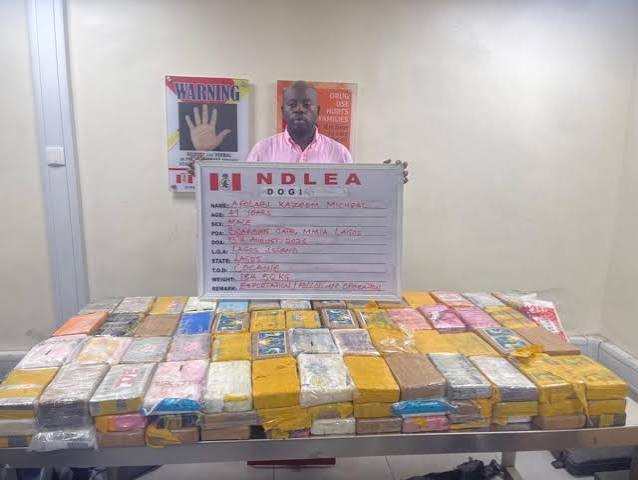
THE ASPIRATION TRAP: KC Luxury and the Architecture of False Wealth in Nigeria
On the night of August 13, 2026, a man walked toward the boarding gate at Murtala Muhammed International Airport with a business-class ticket to Paris, €7,750, £2,800, N100,000 in cash, and expensive jewellery. He did not make it onto the flight. Operatives of the National Drug Law Enforcement Agency (NDLEA) intercepted him at the gate, acting on intelligence that he was attempting to flee the country.
His name is Afolabi Kazeem Michael. To more than 700,000 followers on Instagram, he was KC Luxury — a “big boy” of Lagos, a self-styled entrepreneur in fashion, luxury goods, and lifestyle, with claimed interests in real estate, agriculture, and philanthropy. His motto, splashed across his content: life is only for the living. To the NDLEA, he is something else entirely — the alleged Nigerian arrowhead of a transnational cocaine trafficking cartel, accused of running a pipeline of narcotics from South America through Nigeria to the United Kingdom, Europe, and Asia, tied to a 184.5kg cocaine seizure valued at ₦39 billion.
Both descriptions are, allegedly, the same man. That is the story.
CSR Reporters does not cover crime for its own sake. We cover the conditions that make crime look like success — the systems, incentives, and silences that allow a man to build a 700,000-strong following on a lifestyle funded, investigators allege, by narcotics, while a generation of young Nigerians watches, takes notes, and adjusts its own definition of what winning looks like. The KC Luxury case is not really about one man’s arrest. It is about the architecture that produced his audience.
I. THE ASPIRATIONAL ECONOMY
Every generation has had its cautionary tale of crime dressed as glamour. What is different now is the infrastructure. KC Luxury did not need a magazine profile, a television slot, or the endorsement of an institution to build legitimacy. He needed a phone, a feed, and an aesthetic. Instagram did the rest — algorithmically rewarding the appearance of success far more efficiently than it could ever verify the substance of it.
This is the defining feature of what we might call the aspirational economy: a marketplace where the signals of wealth — property, jewellery, foreign travel, a curated circle of “philanthropy” — now circulate independently of the wealth itself. Verification has been replaced by visibility. A young Nigerian scrolling through that feed has no mechanism for distinguishing a legitimately built portfolio from a laundering front. Both look identical in a nine-second reel. Both come wrapped in the same vocabulary of hustle, grind, and destiny.
This is not a uniquely Nigerian pathology — the same economy of manufactured aspiration exists from Lagos to Los Angeles to Mumbai. But it lands with particular force in a country where youth unemployment is high, where formal pathways to wealth are visibly slower and less certain than they once were, and where the gap between what hard work is supposed to yield and what it actually yields has widened into something young people can see and resent. Into that gap steps the influencer-trafficker, the cyber-fraud “runs” boy, the ritualist-turned-motivational-speaker — each offering a shortcut dressed in the language of ambition.
What makes KC Luxury instructive rather than exceptional is precisely that he did nothing unusual for his category of public figure. He posted the cars, the watches, the trips, the claim to “investments.” He used an AI-generated voiceover to narrate his own success story. He operated exactly within the norms of an attention economy that has never asked, and structurally cannot ask, where the money came from — only whether the content performs.
II. THE INSTITUTIONAL ACCOUNTABILITY GAP
Here is where an accountability platform must resist the temptation to end the analysis at the individual. Individuals who choose to build empires on trafficking will always exist; the more urgent question is what the surrounding institutions — platforms, banks, event organisers, brand sponsors, even the awards and recognition ecosystem — did or did not do to interrupt the signal before it reached a mass audience.
Three accountability gaps are visible in this case:
Platform verification. Social media platforms extend algorithmic amplification and monetisation to accounts based on engagement, not on any credible check against the source of the wealth being displayed. An account can accumulate 700,000 followers, brand partnerships, and paid promotions without a single point in that pipeline requiring proof of legitimate income. Financial institutions operate under know-your-customer obligations; platforms that function as de facto marketing infrastructure for “lifestyle brands” largely do not.
Financial system gatekeeping. The recovery of large sums of foreign currency, luxury vehicles, and jewellery from a Banana Island apartment raises the familiar question of how visible, ostentatious accumulation of this scale moves through Nigeria’s banking and property systems without triggering the suspicious-activity reporting that anti-money-laundering frameworks are designed to produce. This is not a new gap. It is one CSR Reporters has flagged before in relation to other high-profile financial crime cases, and it remains a standing weakness in institutional accountability, not a one-off failure.
The legitimacy-conferring ecosystem. Brand endorsements, event invitations, “influencer of the year” recognitions, and the general culture of validating whoever has the loudest following — these are not neutral. Every institution that hands a platform, a stage, or an award to a figure without asking basic questions about the underlying source of their visibility is, in effect, laundering reputational legitimacy the same way a shell company launders financial legitimacy. This is a caution CSR Reporters extends to its own sector as much as to any other: the awards and recognition economy across Africa — ourselves included — has an obligation to interrogate who it elevates and why, before the story of that elevation is written by an EFCC or NDLEA press briefing instead.
None of this excuses individual criminal conduct. It does mean that “one bad actor was arrested” is an incomplete accountability story. The more durable question is why so little in the surrounding system made his rise to 700,000 followers difficult, costly, or even mildly inconvenient.
III. THE PRESSURE ECONOMY ON YOUNG NIGERIANS
The final, and perhaps most consequential, layer is the one CSR Reporters is most concerned with: what this case teaches — deliberately or not — about how wealth is meant to be pursued.
Nigeria’s young people are not naive about the KC Luxury story. Many will read the NDLEA briefing with more cynicism than shock. What should concern an accountability platform is not that young people are shocked, but that so many are unsurprised — because the underlying message, that visible wealth is proof of success and the means are a private matter, has already been normalised well before any single scandal breaks.
This is the pressure economy: a set of social expectations, amplified by digital culture and sharpened by economic hardship, that tells young people wealth is not optional but obligatory — that dignity, marriageability, respect from family, and even spiritual favour are measured by visible accumulation. “By any means necessary” is rarely stated so bluntly; it is transmitted more quietly, through mockery of those who remain poor while “working hard,” through family pressure to “bring something home,” through a culture that asks how someone made their money only after they have stopped being useful to ask.
Three forces compound this pressure specifically for Nigerian youth:
Economic reality. When legitimate pathways to a stable, dignified income are visibly slower, more uncertain, and less rewarding than they once were, the psychological distance between “legitimate ambition” and “wealth by any means” narrows. This is not an excuse for criminality; it is a description of the terrain that traffickers, fraudsters, and other predatory recruiters exploit.
Absence of credible counter-models. For every KC Luxury with 700,000 followers, there are entrepreneurs, professionals, and civic leaders building real, patient, accountable success — but they are rarely as visible, rarely as loud, and rarely as algorithmically rewarded. An accountability platform’s job is not only to expose the false models; it is to actively elevate credible ones, so that “wealth built slowly and honestly” is not the least visible option available to a seventeen-year-old with a phone.
Mentorship vacuum. Where structured mentorship, apprenticeship, and institutional guidance are weak, informal figures — influencers, “big boys,” self-styled mentors — fill the vacuum by default, not because they are the best available models but because they are the most present ones. The KC Luxury case is a reminder that in the absence of deliberate, credible mentorship infrastructure, young people will mentor themselves off whoever shows up loudest in their feed.
IV. WHAT ACCOUNTABILITY REQUIRES GOING FORWARD
CSR Reporters does not believe the answer to this case is moral panic about social media or nostalgic appeals to “values.” The answer is structural, and it sits with the same institutions this platform exists to hold to account:
- Financial institutions must close the gap between ostentatious, unexplained wealth and the suspicious-activity reporting obligations already on their books — this is enforcement of existing frameworks, not new regulation.
- Platforms that monetise influence should be pressed, including by advertisers and brand partners, to build meaningfully into their due-diligence what they currently outsource entirely to algorithmic engagement.
- Nigeria’s award, recognition, and convening ecosystem — a space CSR Reporters operates directly within — has a duty to vet who it elevates, and to resist the shortcut of borrowing a figure’s existing audience as a stand-in for legitimacy.
- Institutions serious about youth development need to treat credible mentorship and visible, honestly-built success stories as infrastructure to be funded and amplified, not as a hope left to chance.
KC Luxury’s arrest will fade from the news cycle within weeks, as these stories always do. The conditions that made his following possible will not fade unless something is deliberately done about them. That is the distinction an accountability platform exists to keep in view: between a scandal that ends with one arrest, and a system that keeps manufacturing the next one.
This article is part of CSR Reporters’ ongoing accountability coverage examining the intersection of public influence, institutional oversight, and ethical leadership across Africa.
[give_form id="20698"]


1 thought on “THE ASPIRATION TRAP: KC Luxury and the Architecture of False Wealth in Nigeria”