ROSEMARY IMOBHIO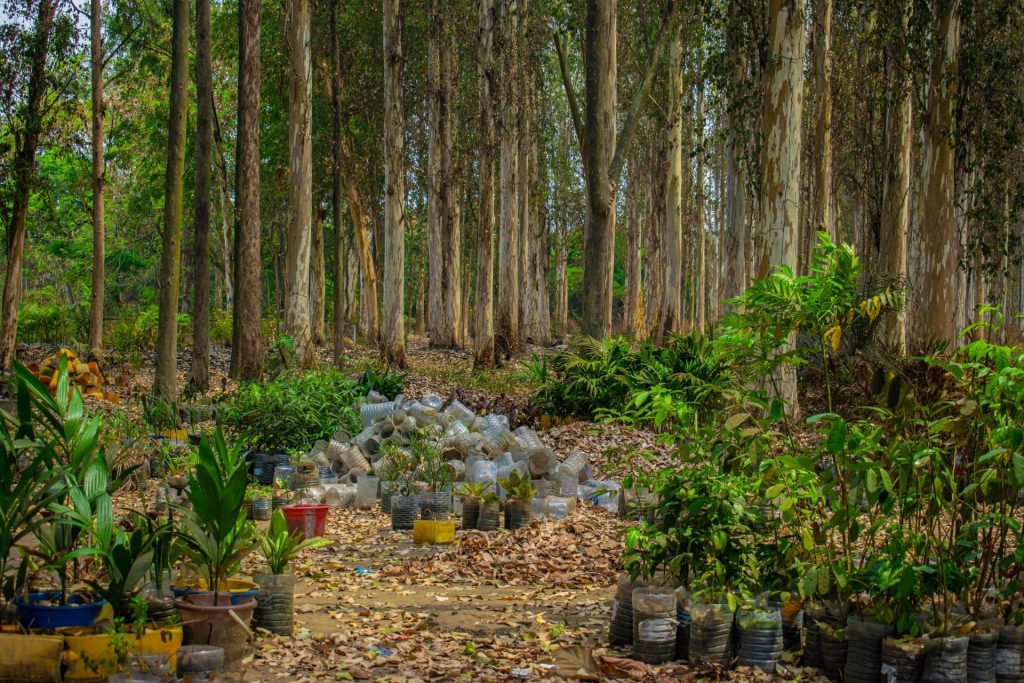
Tree planting is often presented as a straightforward response to deforestation, land degradation and climate change. However, Ethiopia’s experience with eucalyptus plantations shows why restoration projects require more than seedlings, funding and ambitious planting targets. The wrong species, planted in the wrong location, can create environmental pressures that undermine some of the benefits a project intends to deliver.
Scientific research in Ethiopia has raised concerns about the potential effects of eucalyptus plantations on spring-water flow, soil moisture and groundwater recharge. Eucalyptus has helped meet demand for timber and fuelwood in the country. So, the findings highlight the need to examine how large-scale planting decisions affect surrounding ecosystems and the communities that depend on them.
For African governments, businesses and development partners investing in reforestation, the case raises an important issue of accountability. A project may meet its planting targets while failing to protect water resources, biodiversity or the livelihoods of nearby communities. Consequently, credible environmental investment must consider not only how many trees are planted, but also what happens to the surrounding ecosystem over time.
Ethiopia’s Eucalyptus Tree Experience
Eucalyptus arrived in Ethiopia in the late nineteenth century, when shortages of firewood and construction timber created pressure on natural forests. Its relatively rapid growth made it attractive to households and policymakers seeking an accessible source of wood. Over subsequent decades, the species spread into agricultural landscapes and became an important source of income for rural communities.
The appeal remains understandable. Farmers can harvest marketable timber, while commercial plantations provide materials for construction and energy. By supplying wood, eucalyptus can also reduce some demand for products sourced from natural forests. Nevertheless, the environmental consequences depend on where the trees grow, how densely they are planted and what land use they replace.
Research from Ethiopia’s central highlands illustrates this complexity. A 2025 review of eucalyptus plantations in Ethiopia accessed by CSR Reporters raised concerns about soil moisture, groundwater recharge and spring-water flow (1). However, the frequently repeated figure of a 48.9% reduction in spring-water flow should not be treated as a universal effect or a definitive national estimate without verifying the underlying study and its precise comparison.
Also, in a 2017 study accessed by CSR Reporters, researchers monitored rainfall and surface runoff across 12 experimental plots over 91 days (2). They found that eucalyptus plantations generated less runoff than cultivated land, but runoff did not differ significantly between eucalyptus and grassland. However, the authors stressed that their findings reflected local conditions and required further investigation elsewhere.
These findings do not establish that eucalyptus is universally harmful to water systems. Instead, they demonstrate that changing vegetation can alter how landscapes absorb, retain and release water.
The practical lesson is that fast-growing trees can offer economic benefits while creating ecological trade-offs. Those trade-offs require investigation before plantations expand, particularly where communities already depend on limited water supplies.
Why the Lesson Matters Beyond Ethiopia
Across Africa, restoration programmes respond to different environmental pressures. They range from deforestation and soil erosion to desertification, biodiversity loss and declining water security. Therefore, a planting strategy that works in one landscape may deliver different results in another.
Species selection is one part of the challenge. Native trees may support local wildlife and established ecological relationships, while mixed planting can improve habitat diversity in suitable settings. In other locations, natural regeneration, agroforestry or the restoration of grasslands may offer better outcomes than establishing dense tree plantations. The appropriate intervention depends on the original ecosystem, local rainfall, soil conditions and community needs.
The Food and Agriculture Organization of the United Nations (FAO) advocates a landscape-level approach to forest restoration. Its guidance emphasises recovering multiple ecosystem functions rather than simply maximising tree cover. It also recommends monitoring indicators such as tree survival, soil erosion, water quality, dry-season flows, wildlife populations and household livelihoods.
This approach challenges the assumption that more trees automatically mean better environmental outcomes. In naturally open ecosystems, for example, extensive tree planting can conflict with existing biodiversity. Similarly, planting water-demanding species in a water-stressed catchment may create competition with agriculture or domestic water use.
Consequently, restoration planners need reliable baseline information before choosing their interventions. They must also account for changes over time, including drought, shifting land use and the effects of neighbouring activities. Without that information, even well-intentioned projects risk overlooking the environmental costs of their decisions.
Nigeria’s Restoration Agenda
Nigeria offers a practical setting for applying these lessons. Land degradation, soil erosion and desertification affect different parts of the country. Communities in the northern drylands face particular pressures from drought and declining land productivity.
The National Agency for the Great Green Wall (NAGGW), established in 2015, coordinates restoration interventions across 11 frontline states. Its activities include afforestation, shelterbelts, woodlots, orchards, agroforestry, sand-dune stabilisation and the promotion of indigenous tree species. The agency also identifies community participation, alternative livelihoods and natural resource conservation as elements of its work.
These interventions demonstrate why Nigeria’s restoration agenda should be assessed as a broader development programme rather than a tree-planting exercise alone. Shelterbelts may help protect farmland from wind erosion, while agroforestry can integrate trees into productive agricultural systems. Meanwhile, natural regeneration can encourage existing vegetation to recover where conditions permit.
However, the success of each intervention depends on its location and management. A species suitable for a dryland shelterbelt may not be appropriate near a vulnerable spring or within a different ecological zone. Likewise, planting targets offer limited evidence of success if seedlings die, existing vegetation suffers damage or local water availability deteriorates.
Nigeria should not assume that Ethiopia’s eucalyptus experience proves similar damage is occurring within its own restoration programmes. The available evidence does not establish that connection. Instead, Ethiopia offers a reason to strengthen local research, assess water availability before planting and monitor the environmental consequences of individual projects.
For the Great Green Wall, this means evaluating restoration against conditions in the communities where projects operate. It also means considering how tree selection affects farming, livestock production, access to fuelwood and other livelihood needs. Where communities depend on the same land and water resources targeted by restoration, their knowledge and participation should inform decisions from the outset.
See: Senator Launches 10000 Tree Planting Initiative in Nigeria
The CSR and ESG Accountability Question
For businesses, governments, development agencies and project funders, the central issue is how to demonstrate that environmental investments deliver lasting benefits.
Tree counts and hectares covered remain useful indicators of project activity. Nevertheless, they cannot independently establish ecological recovery. A company may report thousands of seedlings planted without disclosing survival rates, water impacts or whether the planting supports native biodiversity.
Responsible environmental investment requires a broader set of performance measures. Depending on the project, these could include seedling survival, vegetation recovery, soil condition, groundwater levels, spring discharge, biodiversity and changes in household livelihoods. Establishing baseline measurements before planting would help organisations assess whether conditions improve or deteriorate afterwards.
Environmental and social impact assessments also have an important role. Before committing funds, project developers should identify sensitive habitats, assess local water availability and evaluate potential conflicts with existing land uses. Where the evidence indicates a significant risk, planners should reconsider the species, planting density or location.
Involve Community
Furthermore, community consultation must extend beyond securing initial approval. Residents should have accessible channels for reporting changes in water access, crop performance or other livelihood concerns. Project managers should investigate credible complaints and disclose how they respond.
These responsibilities are relevant to corporate social responsibility and environmental, social and governance (ESG) reporting. Businesses increasingly communicate environmental commitments to investors, customers, regulators and host communities. Yet, credible reporting requires evidence of outcomes rather than a record of expenditure or publicity.
The FAO’s forest-management guidance supports this principle by recommending consistent monitoring of environmental and social performance, with sufficient detail to identify problems early and adjust management practices.
For organisations financing restoration, accountability should therefore continue after the planting campaign ends. Funding agreements can require periodic ecological assessments, public progress reports and corrective action when projects produce unintended consequences. Independent verification may also help distinguish genuine restoration outcomes from claims based primarily on activity.
Importantly, accountability does not mean expecting every project to produce immediate or identical results. Ecosystems recover at different rates, and weather, pests, fire and other external pressures can affect performance. What matters is whether organisations measure those changes honestly, explain setbacks and adapt their approach when evidence demands it.
Restoration Must Deliver More Than Tree Cover
Ethiopia’s experience offers a valuable lesson for Africa’s restoration ambitions. Eucalyptus has supported livelihoods and supplied essential wood products. Yet its environmental effects can vary with local conditions and management. Recognising both realities is essential to making informed decisions.
For Nigeria and other African countries, the priority should be to match restoration methods to ecological needs while protecting the resources on which communities depend. That requires sound research, appropriate species selection, meaningful participation and monitoring that continues long after planting.
Ultimately, the credibility of an environmental commitment rests on what it achieves. Governments, businesses and development partners must be prepared to demonstrate that their investments restore functioning ecosystems, protect water resources and support livelihoods, not merely increase the number of trees in the ground.
| DON’T JUST ANNOUNCE YOUR IMPACT. PROVE IT. CSR REPORTERS helps organisations verify, assess, document and communicate the real impact of their CSR and sustainability initiatives. Project Verification | Beneficiary Feedback | Impact Assessment | Impact Storytelling | Stakeholder Engagement Have an initiative worth documenting? Let us verify it. Document it. Tell the story. Talk to CSR REPORTERS enquiries@csrreporters.com 📞 Call/WhatsApp: 0803 401 2198 | 0903 329 6374 | 0905 024 4468 | 0803 209 8499 www.csrreporters.com |
References
- Belachew, K. G., & Minale, W. K. (2025). Socioeconomic and Environmental Impacts of Eucalyptus Plantations in Ethiopia: An Evaluation of Benefits, Challenges, and Sustainable Practices. TheScientificWorldJournal, 2025, 1780293. https://doi.org/10.1155/tswj/1780293
- Jaleta, D., Mbilinyi, B.P., Mahoo, H.F. et al. Effect of Eucalyptus expansion on surface runoff in the central highlands of Ethiopia. Ecol Process 6, 1 (2017). https://doi.org/10.1186/s13717-017-0071-y