ROSEMARY IMOBHIO
The Federal Competition and Consumer Protection Commission (FCCPC) has found indications of possible price manipulation in Nigeria’s cement market. This raises fresh questions about competition, consumer protection and the cost of building in the country.
The Commission said its preliminary findings followed a three-month cross-border investigation by its Anticompetitive Practices Department. The findings were contained in a 40-page field report released this week.
The investigation began after complaints about rising cement prices. However, the Commission’s findings have added a new dimension to the debate because Nigeria has significantly more cement production capacity than its estimated domestic demand.
Rising Prices Despite High Production
According to the FCCPC, Nigeria has installed cement production capacity of about 60 million to 65 million metric tonnes annually. Domestic consumption, meanwhile, is estimated at only 25 million to 30 million tonnes. That gap means the country has substantial capacity beyond local demand. Nigeria is also a net exporter of cement to neighbouring countries.
Ordinarily, such conditions should create room for stronger competition and potentially lower prices. Instead, consumers have watched prices move in the opposite direction. CSR Reporters research shows a 50kg bag sold for about N9,300 to N9,700 in January. By the middle of the year, the same quantity was selling for between N10,500 and N13,000. In some locations, prices reportedly reached N13,000 to N15,000 by July.
The trend has already attracted wider government attention. In June, Works Minister David Umahi called on cement manufacturers to reduce their prices. His warning was that the increases were putting pressure on infrastructure projects and triggering requests for contract variations.
FCCPC Questions Industry Explanations
Cement manufacturers and other industry participants have pointed to several reasons for the higher prices. These include increased energy costs, exchange-rate pressures, imported machinery and spare parts. They also cite transportation expenses and other logistics costs.
The FCCPC, however, said it is testing those explanations against verified information. The Commission plans to examine production costs, capacity utilisation, pricing information and wider market conditions before reaching a final conclusion. This means current findings are preliminary and do not establish that cement manufacturers have committed an offence.
Instead, the evidence has given the regulator enough reason to continue its investigation. The next phase will therefore examine whether current prices can be justified by legitimate costs and prevailing market conditions.
Competition Under Fresh Scrutiny
The structure of Nigeria’s cement industry makes the investigation particularly significant. Publicly available estimates indicate that three major producers account for more than 90 per cent of installed production capacity. The leading companies include Dangote Cement, BUA Cement and HBM Nigeria, formerly Lafarge Africa.
Such concentration does not automatically mean that companies have acted unlawfully. However, it makes effective competition especially important. The FCCPC will now investigate whether there is evidence of coordinated conduct among market participants. It will also examine possible abuse of market power, restrictions on domestic supply and anti-competitive distribution practices.
Furthermore, the Commission is looking at other conduct that could breach competition law. Notably, this comes as the FCCPC continues to take a more active approach to competition issues across Nigeria’s economy. Its mandate includes investigating price fixing, market allocation, abuse of dominant positions and other practices that can distort competition.
The regulator has also faced and won recent legal scrutiny over its authority to investigate pricing complaints. In July, the Federal High Court in Abuja affirmed the FCCPC’s power to investigate consumer complaints. This was in the case concerning airline ticket prices, however, there is a distinction of that power from direct price regulation.
Cement Costs Reach Beyond Builders
The dispute is not only about the price of a building material. Cement affects housing, infrastructure and the wider construction economy. Therefore, persistent increases can eventually reach households through higher building costs and rents.
For small-scale developers, the effect can be particularly difficult. A modest construction project may require hundreds of bags. Consequently, an increase of several thousand naira per bag can add a significant amount to the total project cost.
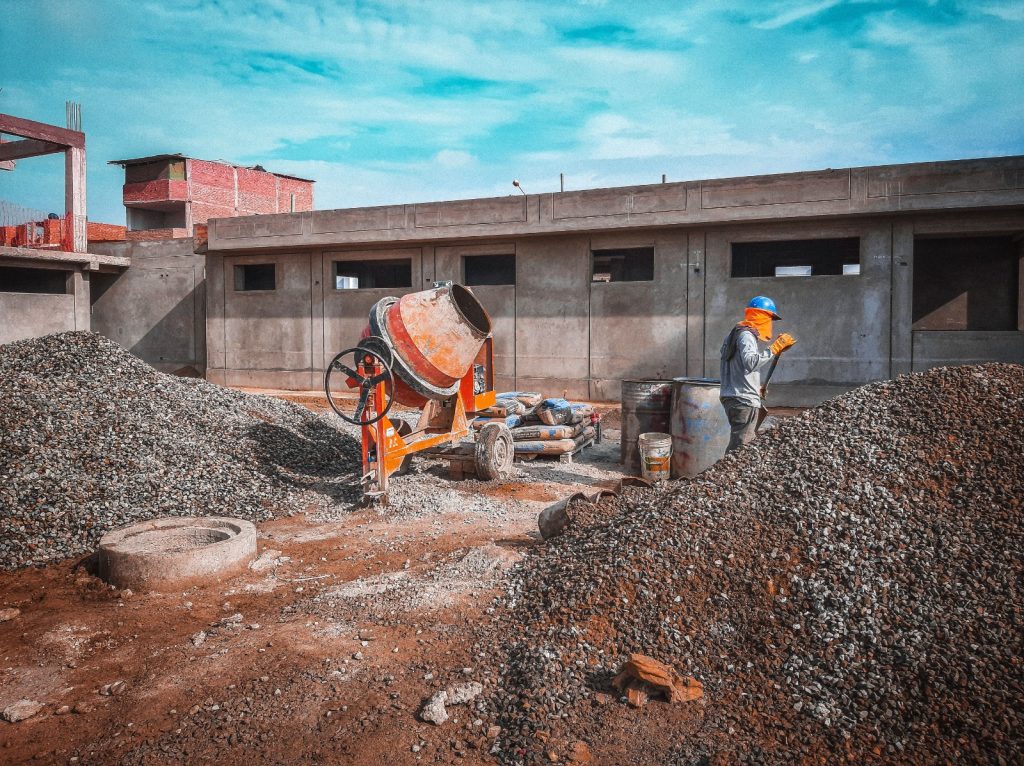
The pressure has also been visible in market reports throughout 2026. In February, CSR Reporters surveys across several states found cement selling above N10,500 per bag. Consumers and builders reported difficulty adjusting to repeated increases.
By July, reports retail prices in some markets had reached N15,000 per bag despite Nigeria’s substantial production capacity. Therefore, the FCCPC investigation could have implications beyond competition policy. Its outcome could influence conversations about housing affordability, infrastructure delivery and the broader cost of living.
The Cross-Border Price Question
The FCCPC also compared Nigeria’s cement market with those of Kenya, Tanzania, South Africa, Egypt, Morocco, Algeria and Togo. The comparison adds another layer to the investigation.
For example, the Commission found that a 50kg bag in Kenya sold for about $5.40, while Tanzania recorded approximately $4.80. Togo, despite having no limestone deposits according to the Commission, recorded about $6.75. Nigeria’s retail prices were higher in the comparison.
However, international price comparisons need to be treated carefully. Differences in taxes, transport, energy costs, exchange rates, distribution structures and market conditions can affect the final price.
For that reason, the FCCPC’s decision to compare prices is useful, but it cannot by itself prove manipulation. Instead, the comparison gives the regulator another basis for testing whether the explanations offered by industry players adequately account for the price gap.
Manufacturers Asked to Produce Records
The investigation has now moved beyond preliminary market analysis. The FCCPC has issued notices of commencement of investigation and summonses requiring key industry players to provide information. The requested information includes pricing methods, production levels, capacity utilisation, exports and relevant commercial relationships.
The Commission will use those records to determine whether the market is operating through genuine competition or whether prohibited conduct may have influenced prices. Importantly, the FCCPC has stressed that the investigation does not mean businesses cannot make commercial decisions.
Executive Vice Chairman and Chief Executive Officer Tunji Bello said companies have the right to make legitimate commercial decisions and earn returns on their investments. At the same time, competition law is intended to ensure that market outcomes are shaped by genuine competition.
What the Investigation Could Mean
The FCCPC’s findings place the cement industry at an important accountability point. If manufacturers can demonstrate that energy, foreign exchange, logistics and other legitimate costs fully explain the increases, the investigation could help clarify why Nigerian consumers are paying more despite substantial domestic production.
If, however, the investigation uncovers coordinated conduct or other anti-competitive practices, the consequences could be more significant. For consumers, the bigger issue is straightforward. Nigerians need to know whether the price they pay reflects genuine production and distribution costs or market practices that limit competition.
The investigation therefore presents an opportunity to strengthen transparency in a sector that has a direct impact on housing and national infrastructure. Ultimately, the FCCPC’s challenge is to establish the facts without dictating legitimate commercial prices.
For the cement industry, meanwhile, the coming phase will test whether its pricing structures can withstand detailed regulatory scrutiny. For millions of Nigerians facing rising construction costs, the hope is that the investigation will provide more than another explanation for expensive cement. They will want answers, accountability and, where the evidence supports it, meaningful relief.
Follow CSR Reporters for credible reporting and deeper insights on corporate accountability, responsible business, sustainability and the issues shaping Nigeria’s future.
[give_form id="20698"]