


Food Prices Are Rising, But Farmers Are Struggling Too: The Pressure Behind Nigeria’s Food Inflation
 CSR Reporters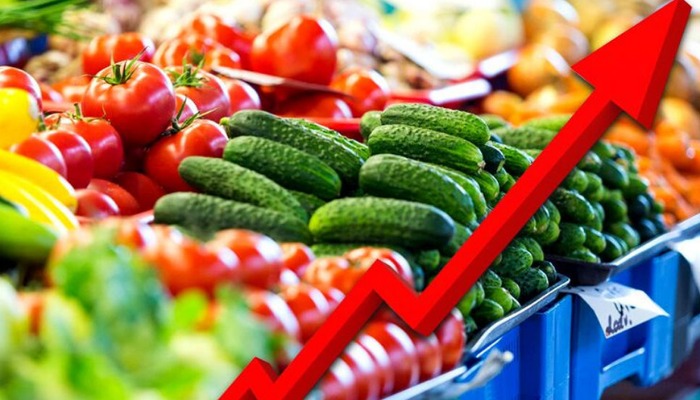
For many Nigerian households, the price of food is not just an economic statistic.
It determines what goes into the cooking pot.
It determines whether a family can afford a balanced meal, whether parents have to reduce what they buy, and whether nutritious food becomes something they can only purchase occasionally.
But there is another side of the food-price story that is sometimes overlooked.
While consumers are paying more, many of the farmers and producers supplying the food are also facing rising costs and difficult market conditions.
Nigeria’s food inflation rate rose to 17.52 per cent in June 2026, up from 16.96 per cent in May, even as headline inflation eased slightly to 15.91 per cent from 15.93 per cent, according to the National Bureau of Statistics (NBS). On a month on month basis, food inflation rose to 3.75 per cent from 2.98 per cent in May.
The figures point to a difficult reality:
Food prices can remain under pressure even when overall inflation begins to moderate.
And behind those prices are producers dealing with their own set of challenges.
When Food Becomes More Expensive
The latest NBS data show that the increase in food inflation was driven by higher prices of several staples, including crayfish, fresh pepper, tomatoes, yam flour, water yam, beef, banana, cassava flour, cowpea, garri, potatoes and yam tubers.
For households, these increases can quickly translate into difficult choices.
A family that previously bought a certain quantity of food with a particular budget may now have to buy less, switch to cheaper alternatives or reduce spending on other necessities.
For low-income households, the consequences can be particularly significant because food already takes up a large share of household expenditure.
That makes food inflation more than a financial issue.
It is also a question of nutrition, wellbeing and household resilience.
When nutritious food becomes increasingly expensive, families may struggle to maintain the quality and variety of their diets.
That is where the conversation moves from inflation to food security.
The Other Side of the Food Chain
It can be easy to see farmers only as the people responsible for producing food and consumers as the people responsible for buying it.
But the relationship is more complicated.
Farmers and food producers also have to absorb the rising costs of operating within the agricultural system.
They need inputs.
They need transport.
They need energy.
They need storage.
They need access to markets.
And they need enough income from their products to keep producing.
When these costs rise, producers face a difficult choice.
Increase prices and risk losing consumers who are already struggling financially.
Or keep prices lower and risk operating at unsustainable margins.
That tension can have consequences across the food system.
Recent analysis of Nigeria’s food inflation has highlighted the role of supply pressures, seasonal conditions and disruptions affecting agricultural production and distribution. In June, food inflation was particularly high in states including Kogi, Niger and Benue, where food inflation reached 53.02 per cent, 43.83 per cent and 40.83 per cent respectively.
These differences also show that food inflation is not experienced equally across the country.
When Production Problems Become Social Problems
Agriculture is often treated as an economic sector.
But its impact is deeply social.
When farmers cannot produce profitably, food supply can become less reliable.
When supply is disrupted, prices can rise.
When prices rise, households may buy less.
When households buy less, nutrition can suffer.
And when farmers are unable to maintain production, communities that depend on agriculture for income can also become more vulnerable.
This creates a chain reaction:
production affects prices, prices affect access, and access affects wellbeing.
That is why food inflation deserves attention beyond the economic pages.
It is also a social impact issue.
The Food Security Question
Nigeria has enormous agricultural potential, but food security is not determined by production alone.
A country can produce food and still have households that cannot afford enough of it.
Food security is also about access, affordability, availability and resilience.
This makes the current food-price situation important for CSR and sustainability conversations.
Businesses, governments, development organisations and civil society groups all have roles to play in strengthening the systems that connect farmers to consumers.
That could mean investment in storage and transportation.
It could mean stronger agricultural extension services.
It could mean better access to climate-smart farming practices.
It could mean financing that allows farmers to invest in production without becoming overwhelmed by debt.
It could also mean reducing some of the losses that occur between farms and consumers.
The bigger goal is not simply to make food available.
It is to help create a food system in which food can be produced, moved and purchased sustainably.
Climate and Agricultural Resilience
There is also an environmental dimension to the challenge.
Agricultural production is increasingly being affected by climate-related pressures, while floods and other disruptions can affect both production and distribution.
Recent analysis of Nigeria’s June inflation data pointed to seasonal supply pressures, flooding and other disruptions as factors contributing to higher food prices.
This makes resilience increasingly important.
Farmers need systems that can withstand disruptions.
Communities need reliable access to food even when production is affected.
And policymakers need to think beyond short-term price responses to the longer-term resilience of the food system.
That is where sustainability becomes more than a corporate buzzword.
It becomes a question of whether agricultural systems can continue supporting people under changing economic and environmental conditions.
Where CSR and ESG Fit In
For companies operating within agriculture and food-related value chains, the issue also creates an opportunity to think differently about social impact.
Corporate support does not always have to begin and end with donations.
Investment in farmer training, climate resilience, storage, technology, market access and sustainable production practices can potentially address some of the structural challenges affecting food systems.
From an ESG perspective, these efforts touch both the Environmental and Social dimensions.
Environmental, because agricultural resilience is increasingly linked to climate and responsible resource management.
Social, because food systems ultimately affect livelihoods, nutrition and access to basic needs.
For CSR programs, the question should similarly move beyond:
“How much support was provided?”
to:
“What problem did the support help solve, and did that solution last?”
Consumers Cannot Carry the Burden Alone
There is a tendency during periods of food inflation to focus heavily on consumers.
Families are told to adjust.
They are encouraged to substitute one food for another.
But consumers cannot solve a structural food-system problem by themselves.
Farmers cannot solve it alone either.
Neither can retailers, processors or government agencies working in isolation.
The challenge requires coordination across the food chain.
Farmers need viable markets.
Consumers need affordable food.
Businesses need functioning supply chains.
And policymakers need reliable data and interventions that respond to both immediate pressures and underlying structural weaknesses.
What Happens Next Matters
Nigeria’s June food inflation figure of 17.52 per cent shows that the pressure on food prices remains significant even as headline inflation has eased slightly.
But the figure itself is only part of the story.
The more important question is what happens to the people behind it.
Can farmers continue producing when their costs remain high?
Can families continue accessing nutritious food?
Can agricultural communities become more resilient to climate and market shocks?
Can investment in the food system reduce the distance between what farmers can produce and what households can afford?
Those questions matter because food inflation is ultimately about more than prices.
It is about people’s ability to eat well, farmers’ ability to keep producing and communities’ ability to withstand economic and environmental shocks.
And perhaps that is the bigger conversation Nigeria needs to have.
Not simply how to bring food prices down, but how to build a food system where farmers can produce sustainably and families can afford what they produce.
Because food security is not achieved when food exists on the market.
It is achieved when the people who produce it can continue producing and the people who need it can afford to eat it.
[give_form id="20698"]


1 thought on “Food Prices Are Rising, But Farmers Are Struggling Too: The Pressure Behind Nigeria’s Food Inflation”